Why the sales vs. marketing split is costing you more than you think
The outbound model is broken. Here’s the cleaner version.
I spent years in environments where sales owned outbound and marketing owned awareness.
It felt like a clean division of labor. In practice, it created attribution arguments, misaligned incentives, and a permanent gap between what the brand said and what the pipeline actually needed.
I recently spent time in a deep session with a group of founders and growth leads who are rethinking this entirely.
The shift in thinking was clear, and it’s something I’ve been working into how we build at AI Strategy League.
The argument is simple: marketing should own all pipeline generation.
Not just awareness. Not just content. All of it.
Here’s why that now makes sense, and what it actually looks like in practice.
The Problem With the Old Split: Sales vs Marketing
When sales owns outbound and marketing owns brand, you get two things:
One: Neither team fully owns the outcome. Attribution becomes political. “That was a marketing-sourced lead” vs. “we were already talking to them” is a conversation no founder has time for.
Two: The messaging fractures. Sales personalises at one level, marketing broadcasts at another, and your target accounts receive inconsistent signals — sometimes in the same week.
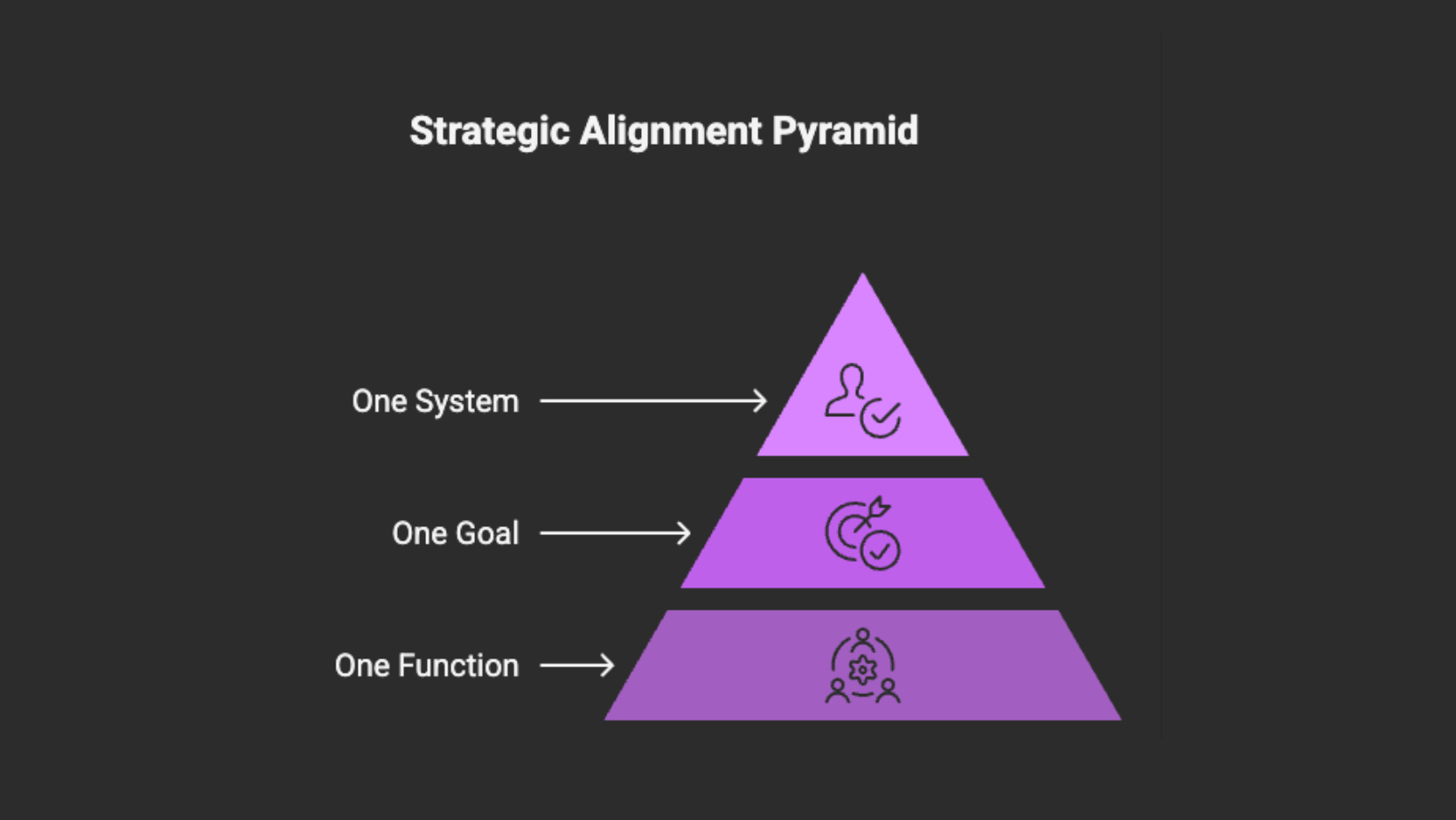
The cleaner model is: One function, one goal, one system
What influences your target accounts to enter the pipeline, and how do you do that at the highest conversion rate and lowest cost per acquisition?
Whether that’s automated or personal is a tactical question. The strategic question is simpler than people make it.
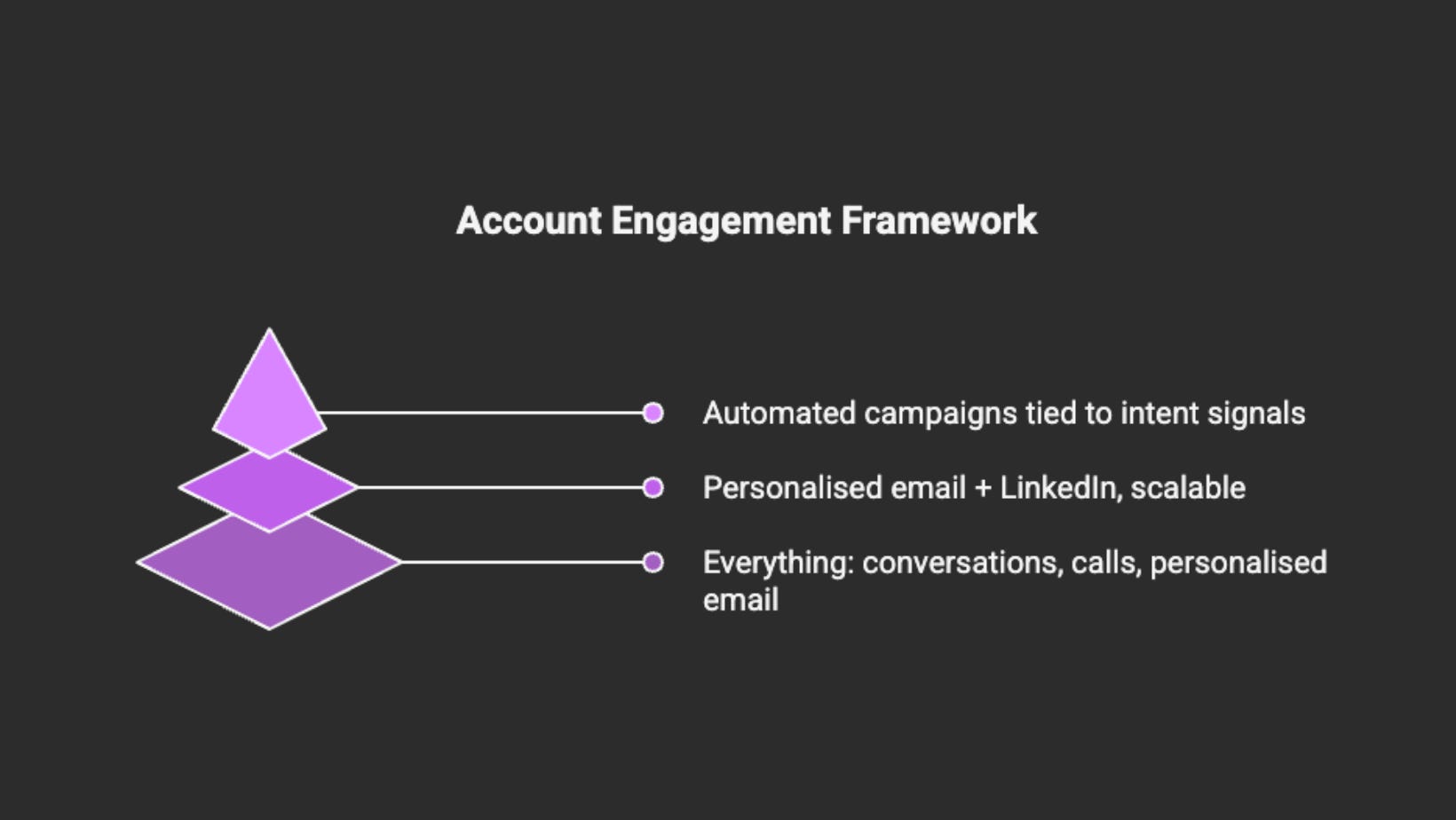
The Outbound Framework and Tiers
Tier 1 — Top 150 accounts: everything.
Conversations, Calls, Messages, Personalized email (not templated, not automated). LinkedIn outreach. These accounts justify the resource investment because the signal is already there.
Tier 2 — Mid-tier accounts: personalized email + LinkedIn.
Still signal-triggered, still personalized enough to feel real, but scalable.
Tier 3 — Broader list: automated campaigns tied to intent signals.
The key word is “signals”. Not spray and pray. Not a list you bought.
Singals
Signals refer to firmographic triggers, product activity, job changes, competitor moves that tell you ‘why now’.
What we’re currently focused on
We’re not focused on this just yet. At this stage, we’re prioritizing building an audience downmarket and developing products for invite-only testing and early use.
The Micro Campaign Model
The shift I’ve made in how I think about messaging: make the offer feel personal, not the message.
Breaking your account list into subsets of 25–50 based on a shared “why now” signal is more effective than either full automation or full personalization.
Segment by pain point.
Segment by timing.
Segment by job function.
Then craft one offer that speaks directly to that subset’s specific situation.
The reader feels like you wrote this for them. You didn’t — but the offer is specific enough that it doesn’t matter.
AI’s Role in Lead Qualification
This is where I’m investing the most time in my own systems right now.
The three-tier qualification model I’ve found most useful:
Clear yes: They match the profile, their signal is warm, they’ve shown intent. Auto-schedule the meeting.
Clear no: Wrong fit, wrong timing, wrong stage. Put them in a long-term nurture sequence. Don’t spend human time here.
In-between: This is where a human needs to make a judgment call. A Slack alert with the key signals — sign-up source, account activity, web scraping results, lands on a person’s screen. They decide in 30 seconds.
The AI does the research. The human makes the call. That’s the right division of labor.
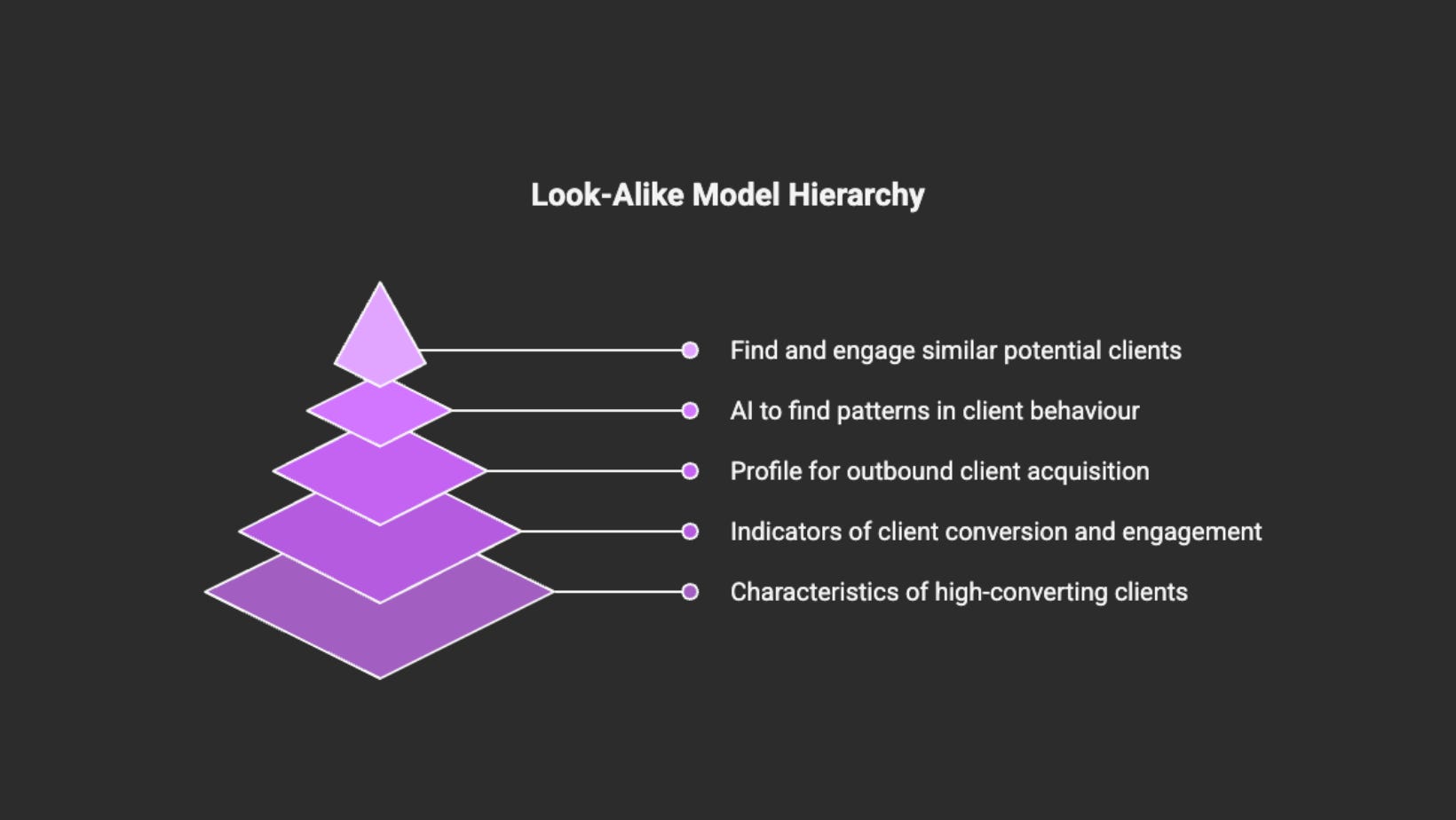
The Look-Alike Layer
One thing I’m testing:
once you have clients who are converting well and going deep with you,
what’s the profile?
What signals predicted their behavior?
That becomes your look-alike model for outbound.
Not a demographic filter, a behavior filter.
Who is talking the way your best clients talked before they became clients?
Where are they? What are they reading?
AI can help identify the pattern. Then you go find more of them.
What This Means for us
We’re actively building this system for our own acquisition, and documenting it as we go.
The goal isn’t to automate everything. The goal is to build the signal layer that tells us exactly where to put human attention. The meetings, the calls, the relationship that’s where the conversion actually happens.
Everything before that? Let the agents handle it.
If you’re thinking through your own outbound architecture and want to pressure-test it, reply to this. Happy to dig in.
Grace
Founder, AI Strategy League | ex-Microsoft