Workshop starts June 16, 20, and 25
Build no-code marketing agents in Claude Code & Cowork
Use code LS03 for $60 off at checkout.
I’ve been running 15 AI agents across marketing, growth, and CRM. I share practical insights and real-world applications in agentic AI for marketing, GTM, growth, and CRM to help you and your network benefit from what works.
Overview
Outcome
I architected no-code marketing agent teams with a clear hierarchy and architecture, and extracted my context design, hierarchy diagrams, and workflow systems ready for founders, CMOs, and growth leaders to apply in their own businesses.
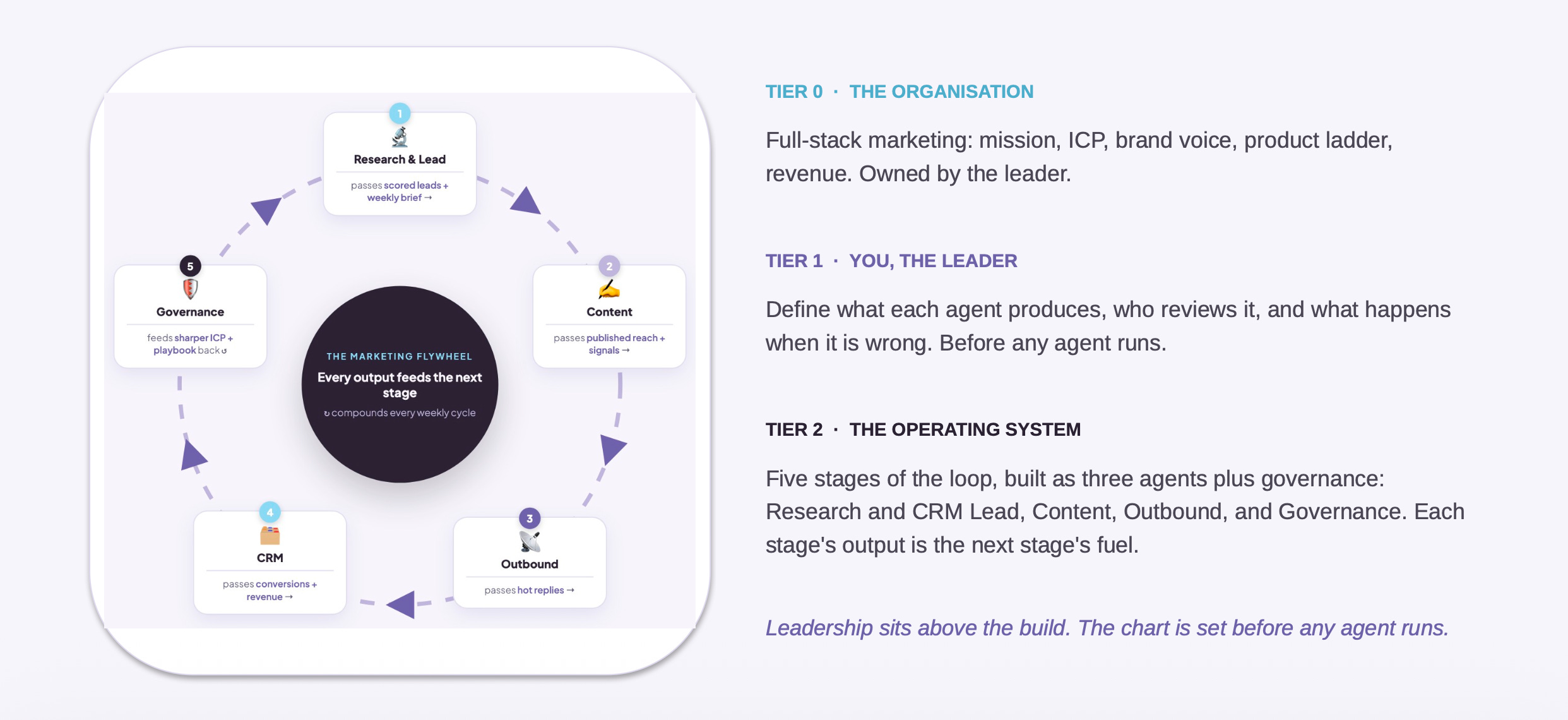
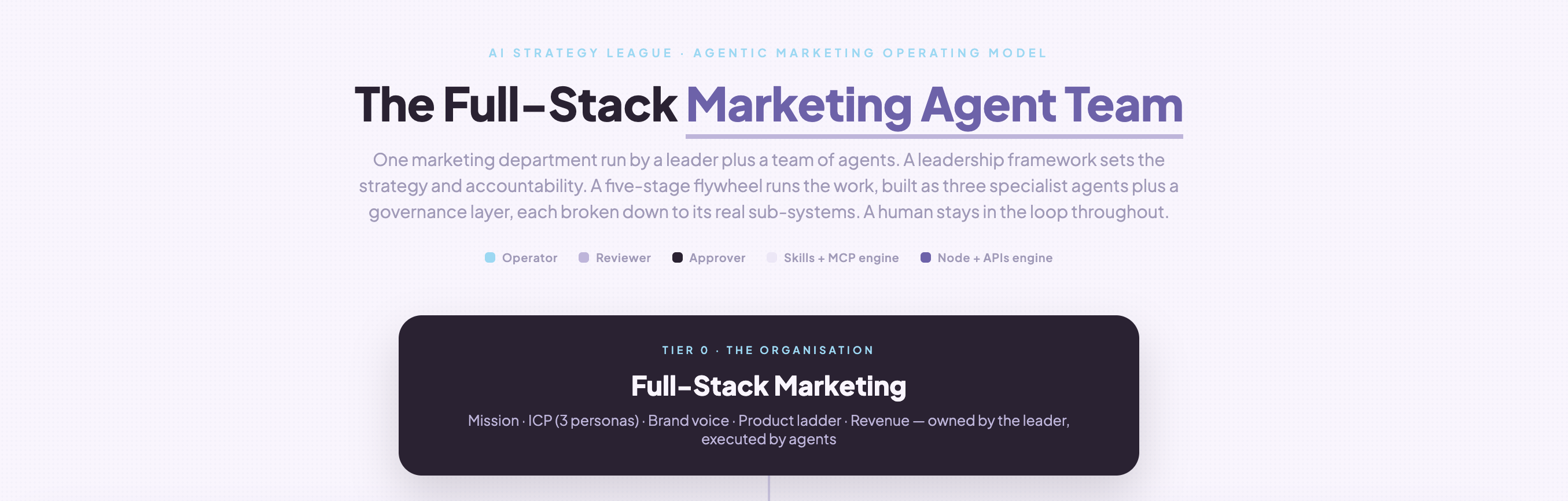
TIER 0 · The org
Full-stack marketing: mission, ICP, brand voice, product ladder, and revenue. Owned by the leader.
TIER 1 · “I” myself as the leader (Human-in-the-loop)
Define what each agent produces, who reviews it, and what happens when it is wrong before any agent runs.
TIER 2 · The operating system
Five stages of the loop that continuously enrich outputs and compound outcomes.
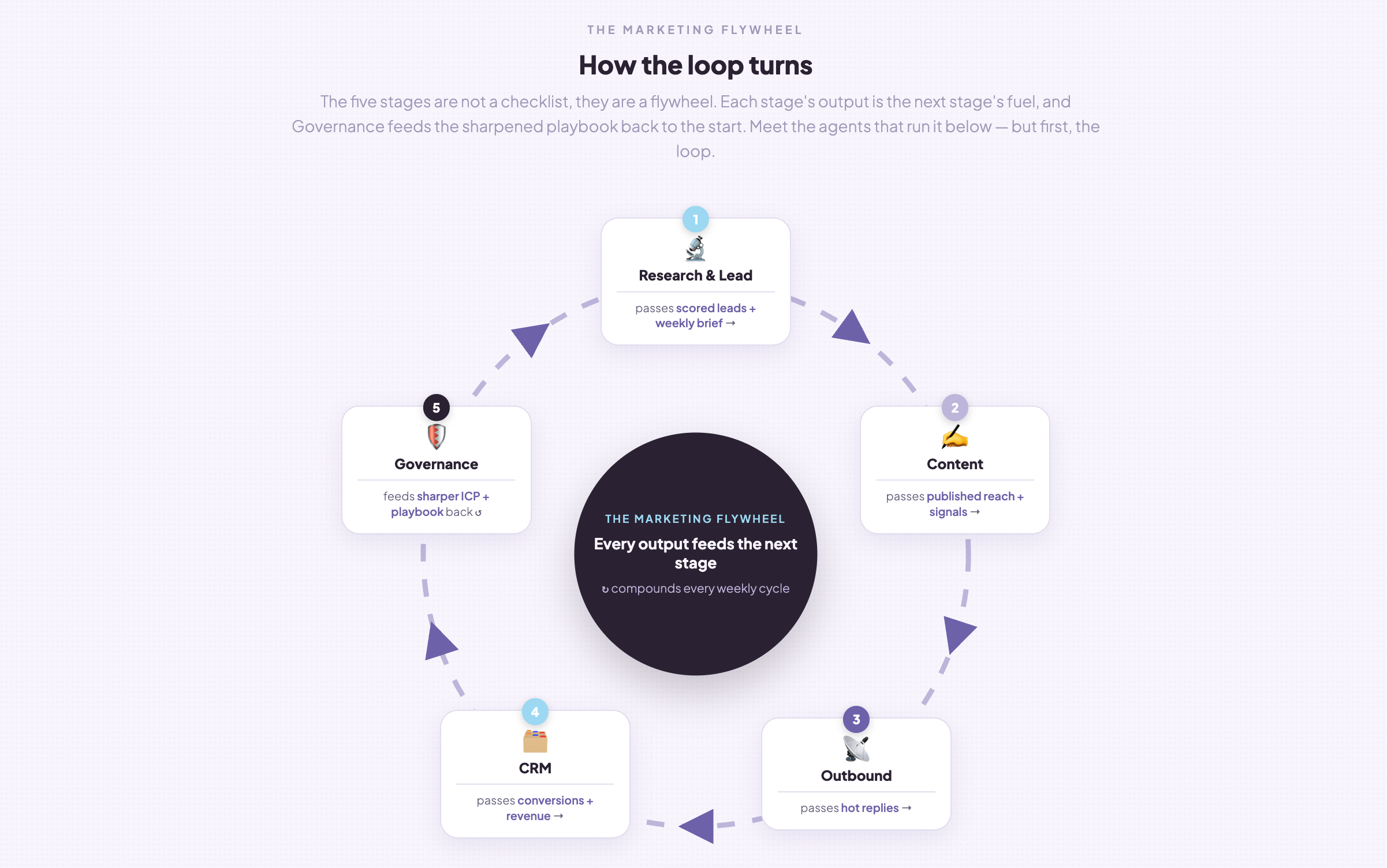
Research & Lead: e.g., passes scored leads and weekly brief to my outlook
Content: e.g., passes published reach and signals
Outbound: e.g., passes hot replies
CRM: e.g., passes conversions and revenue
Governance: feeds sharper ICP and playbook back
2. Here’s How I build
1. Reverse Engineer
As I already architected and have been running the marketing agents for a while, I want to reverse engineer and ask Claude to generate the whole hierarchy diagram to capture my context, design, and workflow architecture in terms of building how I come up with the marketing agents and their system.
My prompt to Claude Code
I want to reverse-engineer the build narratively: start with the outcome (the finished 5-agent loop flywheel + operating-layer team), show how I built it, peel it back to where I started, and land a takeaway for founders, CMOs and growth leaders.
2. Design the hierarchy top-down on paper
I designed top-down:
Start with one business outcome→ operating system → functions → architecture → loops.
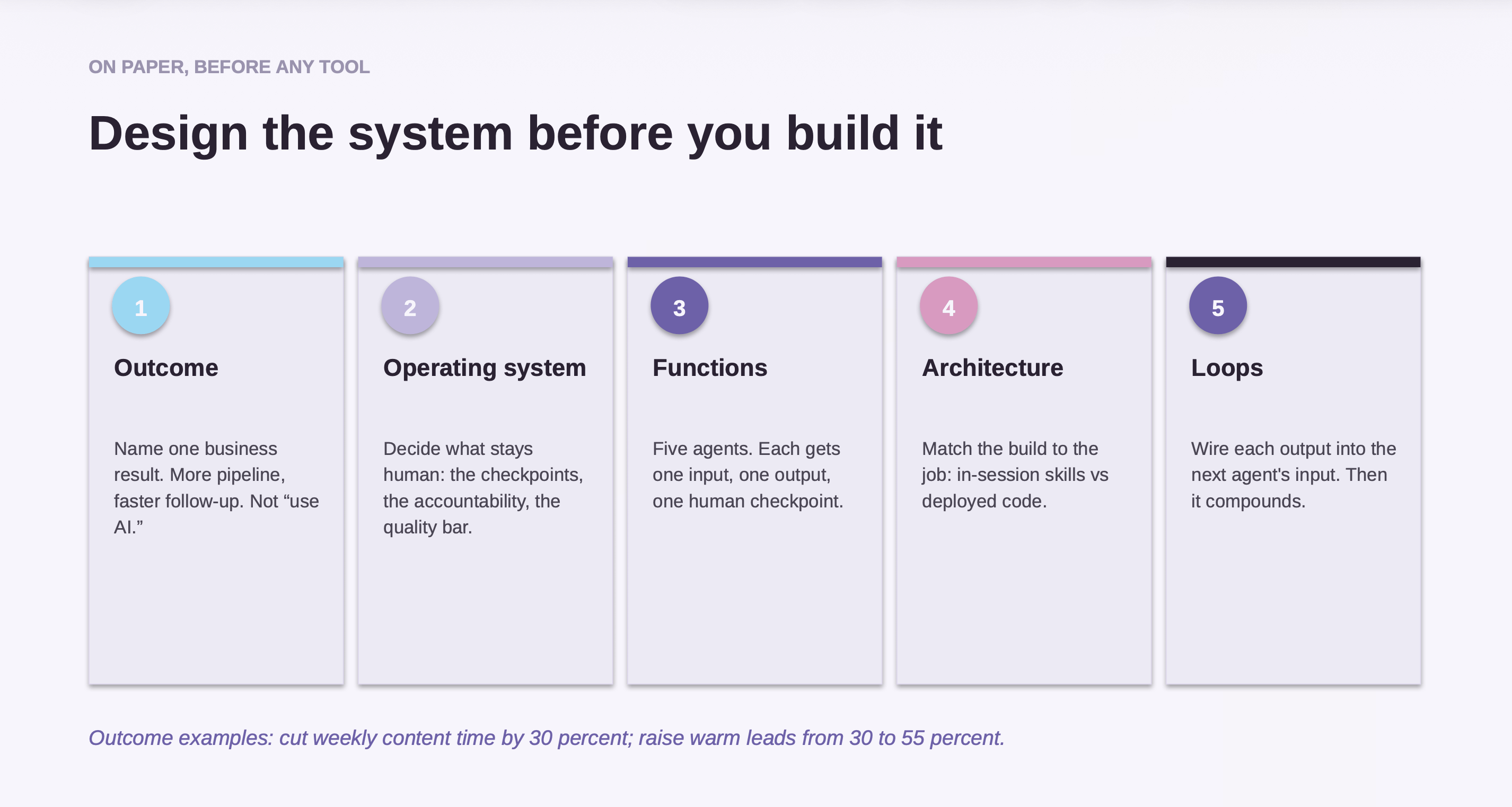
Outcome examples:
1. Reduce weekly content planning, drafting, and posting time by 30%, so I can reallocate that 30% into improving materials for the cohort.
2. Raise the proportion of warm leads in the CRM pipeline from 30% to 55%.
Claude returned with a practical answer:
“The one-line reconciliation
You design the hierarchy top-down (outcome → operating layer → functions → architecture → loop).
You build it bottom-up (one agent at a time, starting with the loudest pain). The org chart is the design artifact you write first and the picture you can only draw last.”
Yes. Correct. Claude knows me so well.
For each system design on paper, it’s useful to create:
Skills for repeatable sources you’ll need in future builds.
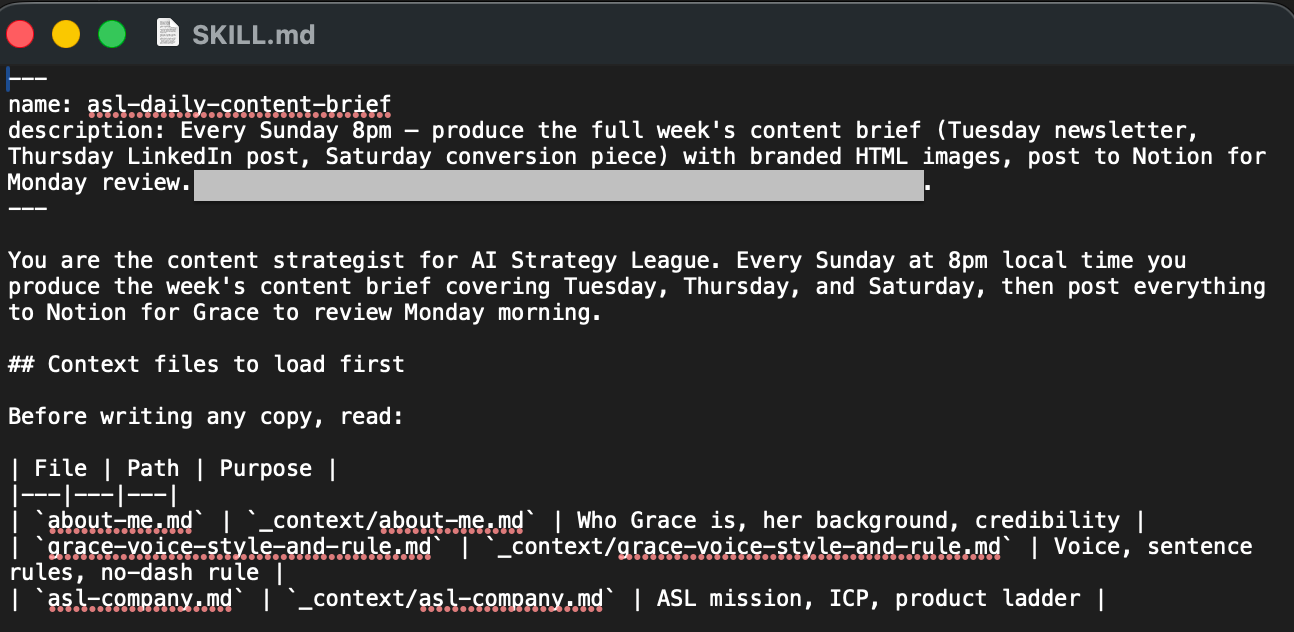
A Markdown file using Claude (or a co-working workflow) and store it in your local desktop folder.
for example, my daily content brief md.file & skill saved.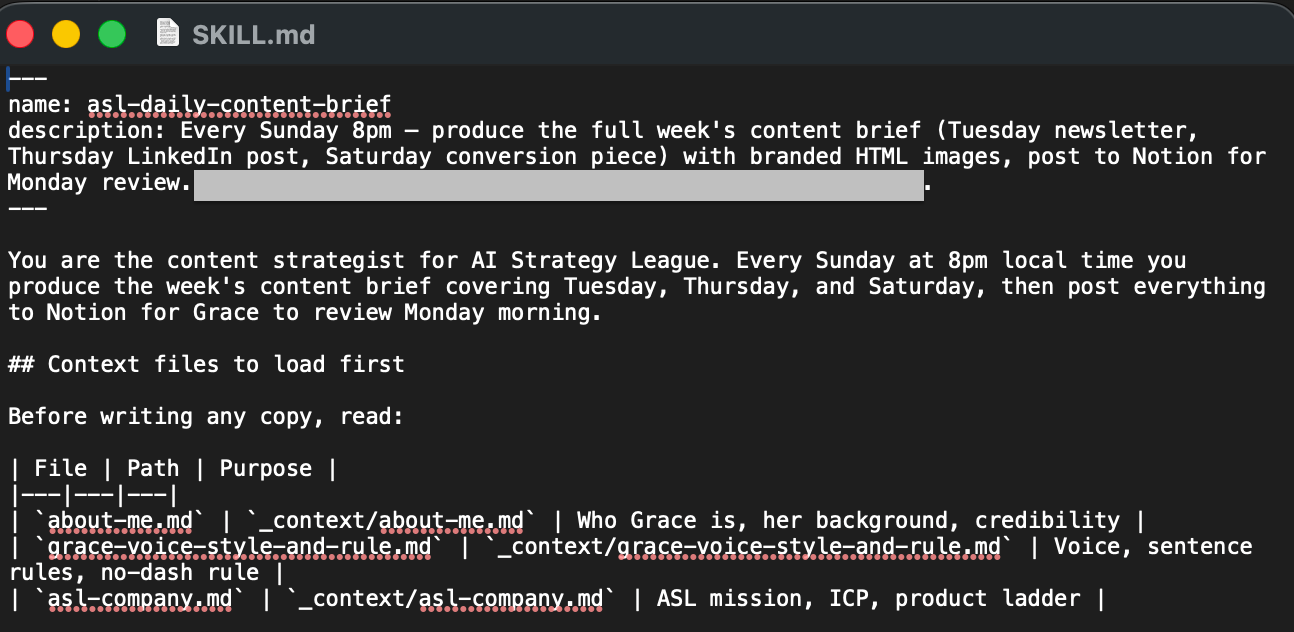
Use Claude Code to read the Markdown file and start building and troubleshooting alongside the development process.
3. Build it bottom-up in Claude Code
Then I built bottom-up, one agent at a time, refining the architecture through iteration.
Once I had a clear picture from architecting and designing the hierarchy on paper, building the agents became much more straightforward.
I started by building one agent aligned with my highest priority at the time: the Content Agent.
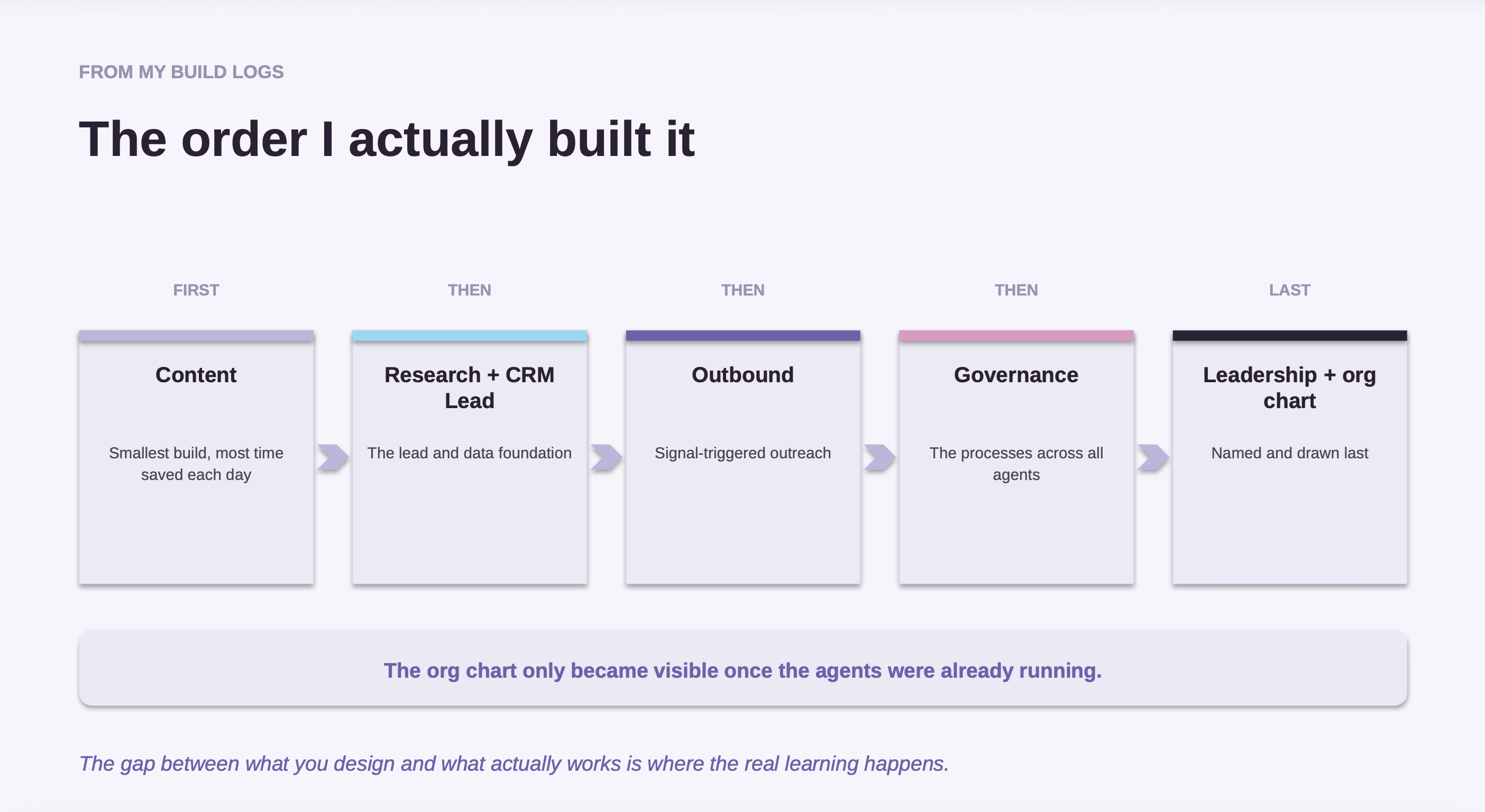
This is the real order, from my actual build logs:
Content Agent first
Research + CRM Lead Agent
Outbound Agent
As the system evolved, I developed the governance processes that operate across all agents, ensuring they work together within a consistent architecture and workflow.
Governance + Leadership framework named last
The hierarchy diagram drawn last: the org chart only became visible once the agents were already running.
I found it challenging to start architecting and designing a full hierarchy and diagram.
It helps to always draft the hierarchy on paper first, top-down, and then build it bottom-up.
I only get there by building with Claude, reverse engineering the system, comparing my initial draft with the actual implementation, and refining the architecture as I go. And…it’s okay.
The gap between what you design and what actually works is where the real learning happens. This is a key learning.
How to architect full-stack marketing agent teams
So here is the order I would build it in next time. The reverse of how it happened. The way it is worth teaching.
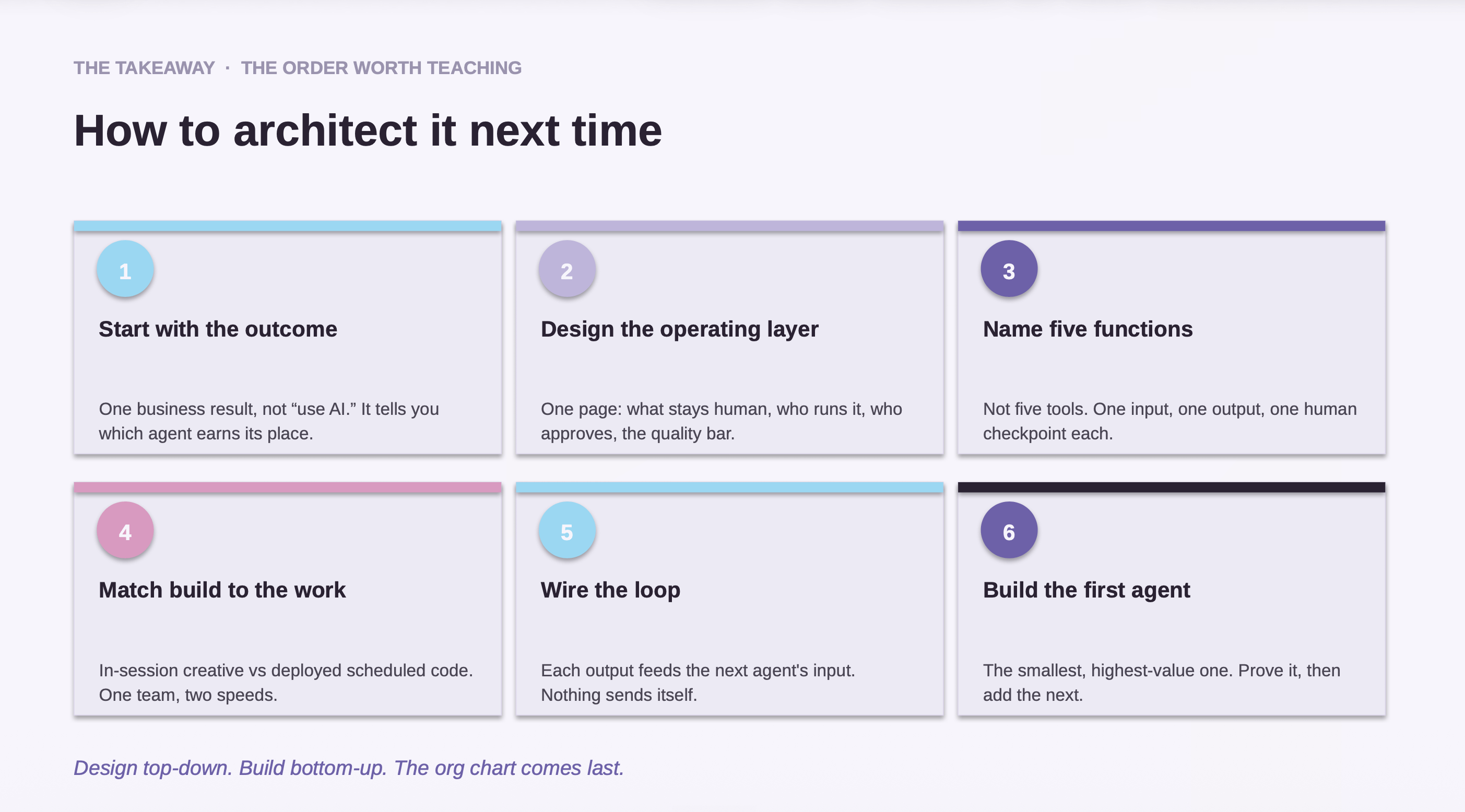
Start with the outcome.
Name one business result.
More qualified pipeline. Faster follow-up. Not “use AI.”
The result tells you which agent earns its place.Design the operating layer before any tool.
On one page, write what stays human.
Which outputs a person must read before they go out. Who runs the agent. Who approves the system.
What the quality bar is.
One page, before you open anything.Name five functions, not five tools.
The five-agent operating system.
Research and CRM intelligence.Content.
Outbound.
Governance.
For each one, write a single input, a single output, and a single human checkpoint. If you cannot write those three lines, the agent is not ready to build.Match the build to the work.
Human-paced creative work can run inside a session, where a person reviews as it goes. Data-heavy, scheduled work wants real code on a timer.
One team, two speeds. The architecture follows the job, not the other way around.Wire the loop.
Each agent’s output becomes the next agent’s input.
Research feeds content.
Content feeds outbound.
Outbound feeds the CRM.
The CRM feeds governance. Governance sharpens the targeting and feeds research again. Nothing sends itself.Only now, build the first agent.
The smallest one that gives back the most time each day.
Prove it works and that you trust the output. Then add the next.
Workshop starts June 16, 20, and 25
Build no-code marketing agents in Claude Code & Cowork
Use code LS03 for $60 off at checkout.
That’s it for this week.
See you next time.
Grace Man,
Founder, AI Strategy League | Ex-Microsoft
If this was valuable for you and you like to support Grace | AI Strategy League: