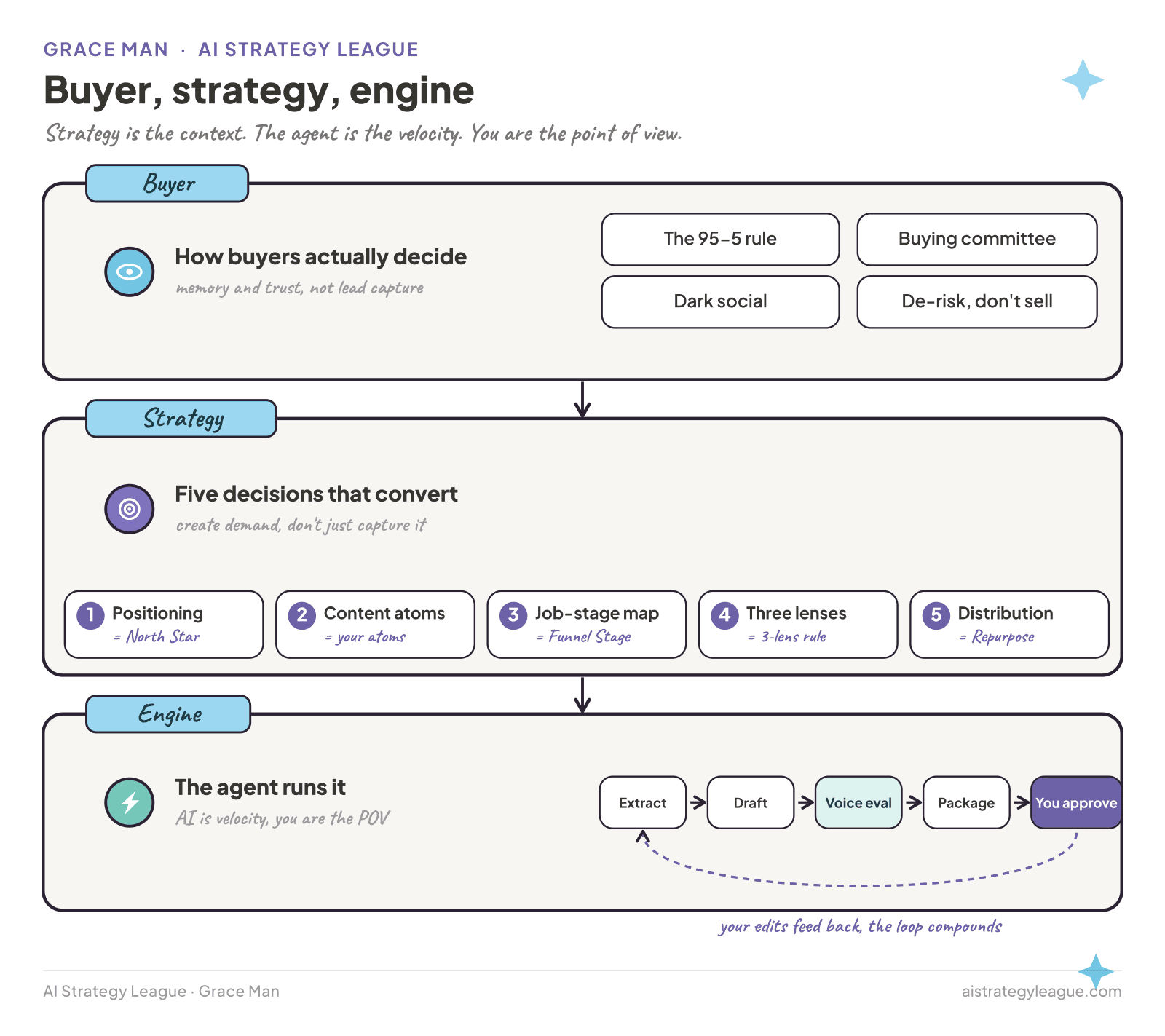
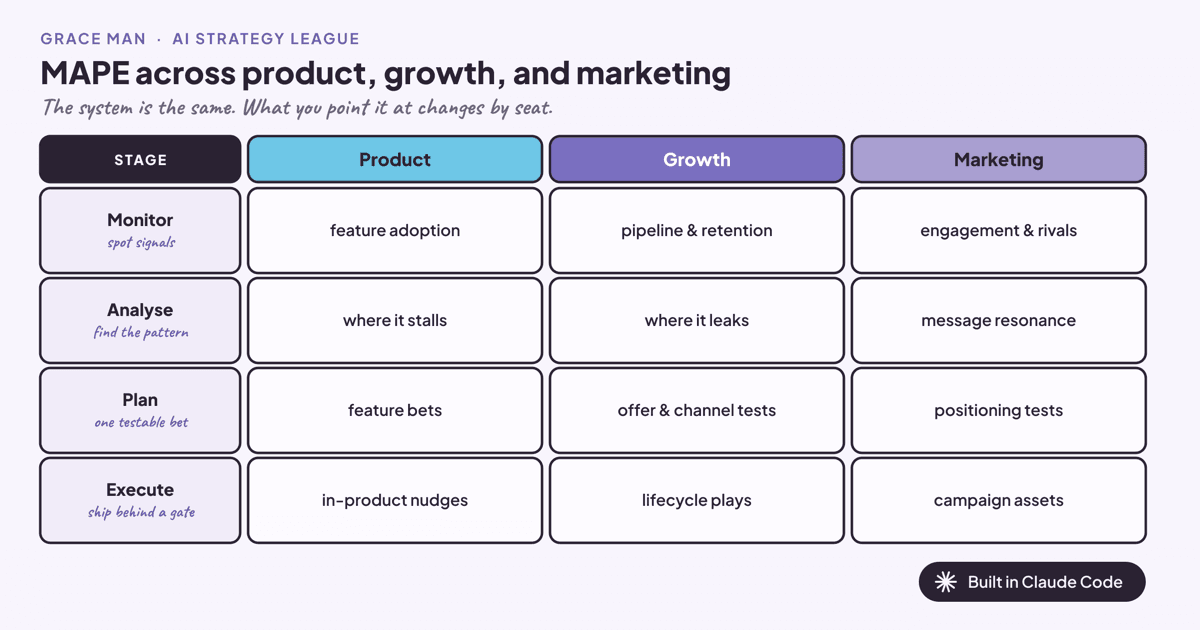
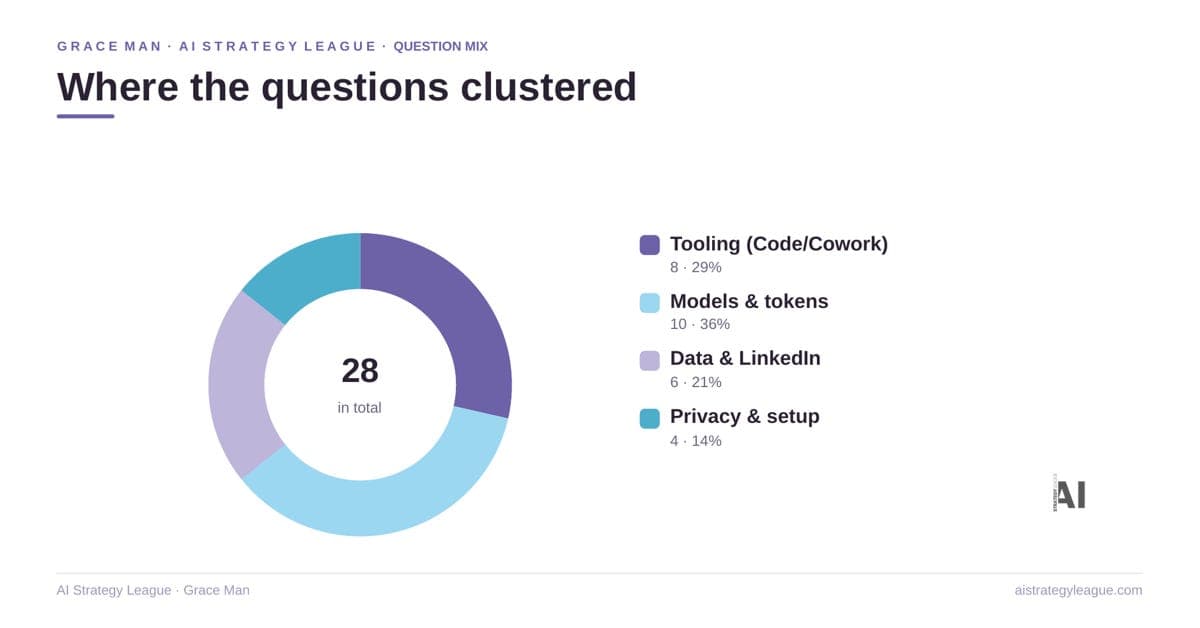
Workshop starts June 16, 20, and 25
Build no-code marketing agents in Claude Code & Cowork
Use code LS03 for $60 off at checkout.
Have you tested Anthropic’s latest Opus 4.8 / Opus 4.8 (1M Context) yet?
I spent this week testing Opus 4.8 in Claude Code across two very different builds.
1. Presentation Deck Build
Simple, but not easy.
I used Opus 4.8 to build presentation decks for upcoming cohorts, workshops, and lightning sessions while staying closely aligned with my brand guidelines and specific design requirements.
Goal
The goal wasn’t just to build slides. The goal is to test Opus 4.8 across nuanced dimensions:
• Design quality and layout decisions
• Alignment with brand guidelines
• Multidisciplinary reasoning
• Speed and execution
• Self-QA and problem-solving ability
In fact, it is better use Cloud Design to create your design system for prototype, mockups, presentation deck, and marketing materials, rather than using Claude Code to build one each time.
Opus 4.8 (Claude Code) vs Sonnet 4.6 (Cowork) in PPT deck slide
Same prompt, same file, same brand guideline on Claude Cowork with Sonnet 4.6.
Presentation deck in Sonnet 4.6 Cowork
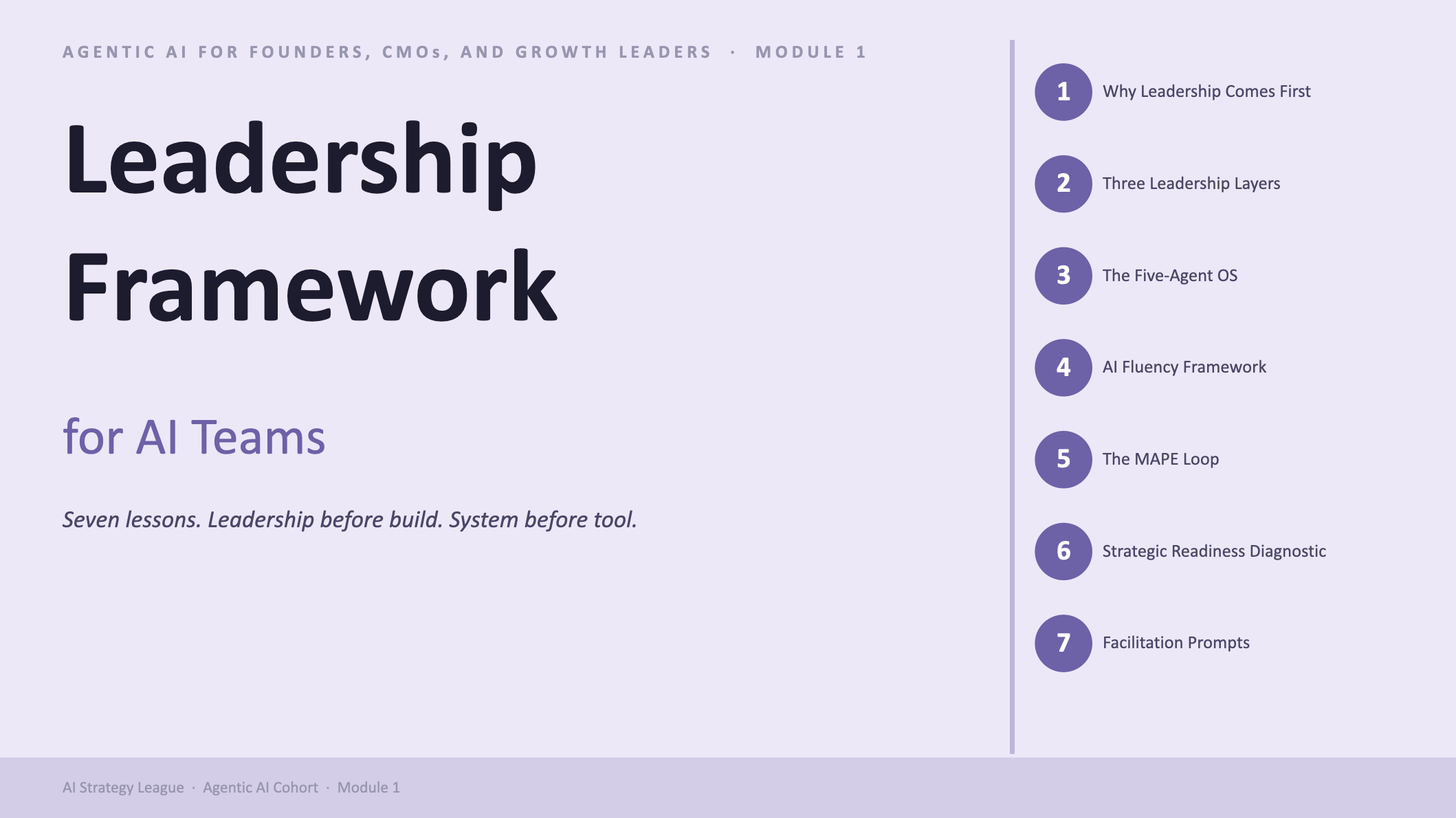
It produced a deck. Not a bad deck. But the background color is not aligned with our brand guideline; 10 inches wide instead of true widescreen, title-case headings we do not use, and a white strip bleeding down the right edge. Close, but not us.
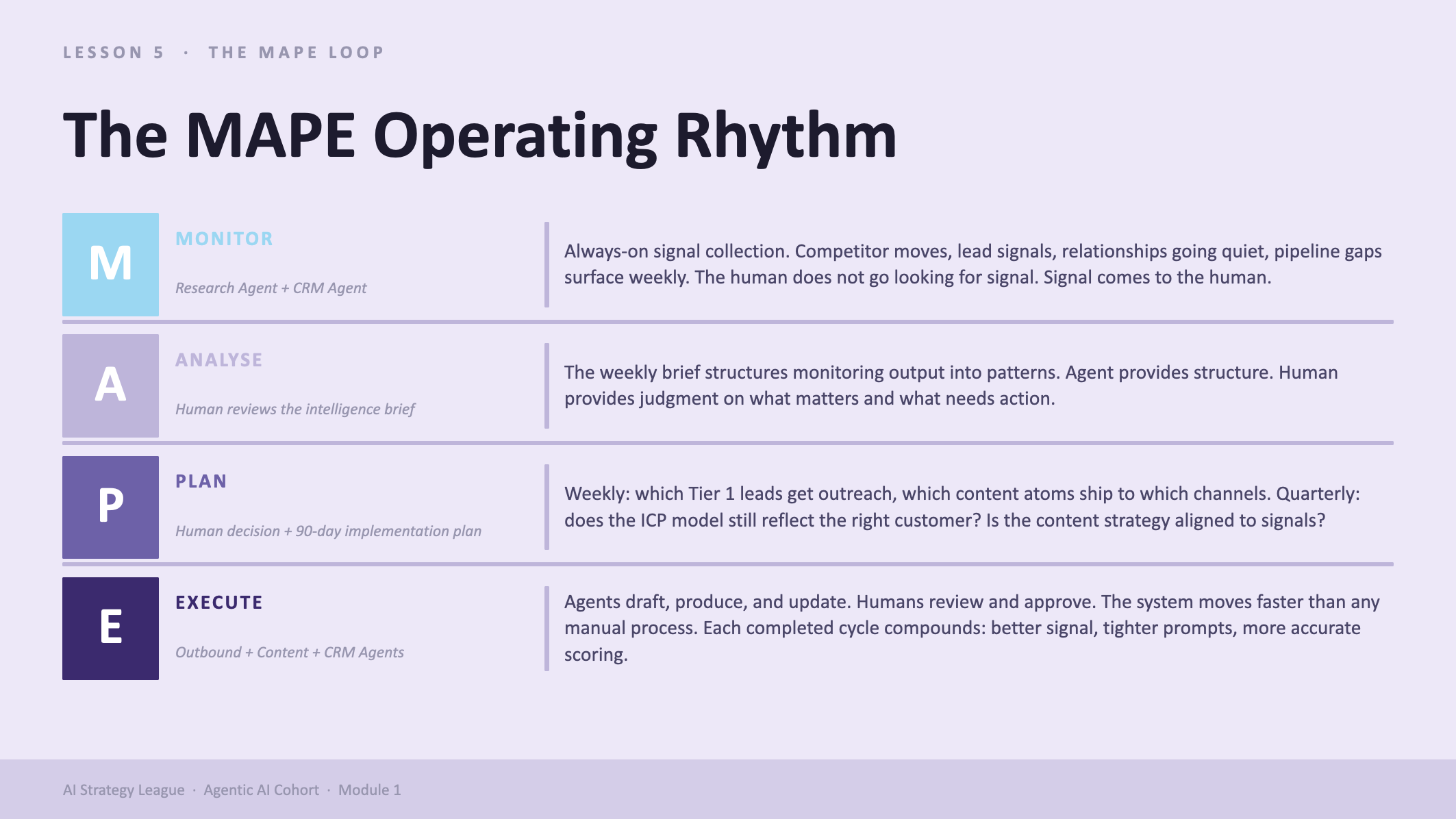
Presentation deck in Opus 4.8 in Claude Code
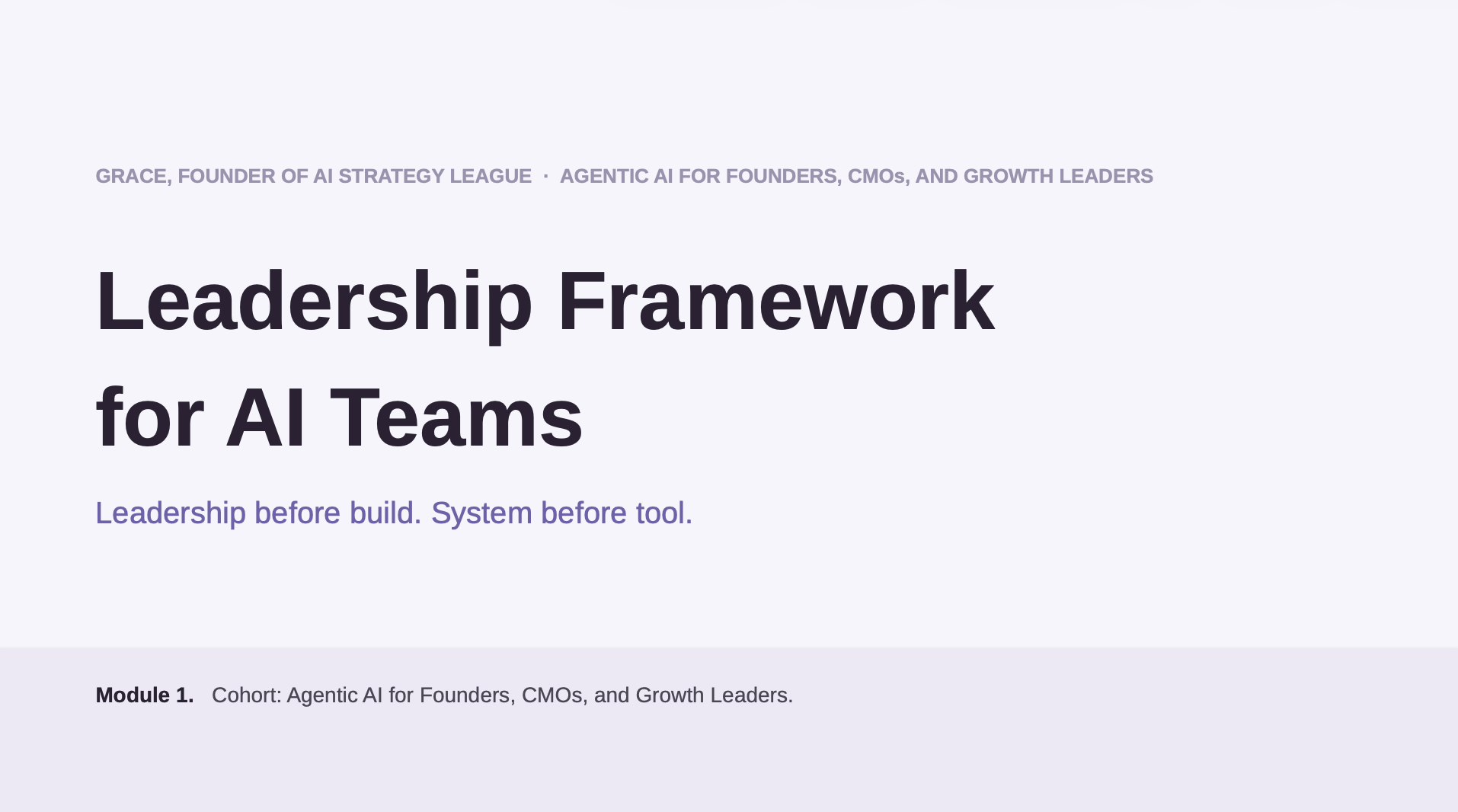
The outputs of Claude Code build presnetation deck with Opus 4.8 in Claude Code is much better than Sonnet 4.6 in Claude Cowork; Same apply using Opus 4.8 vs Sonnet 4.6.
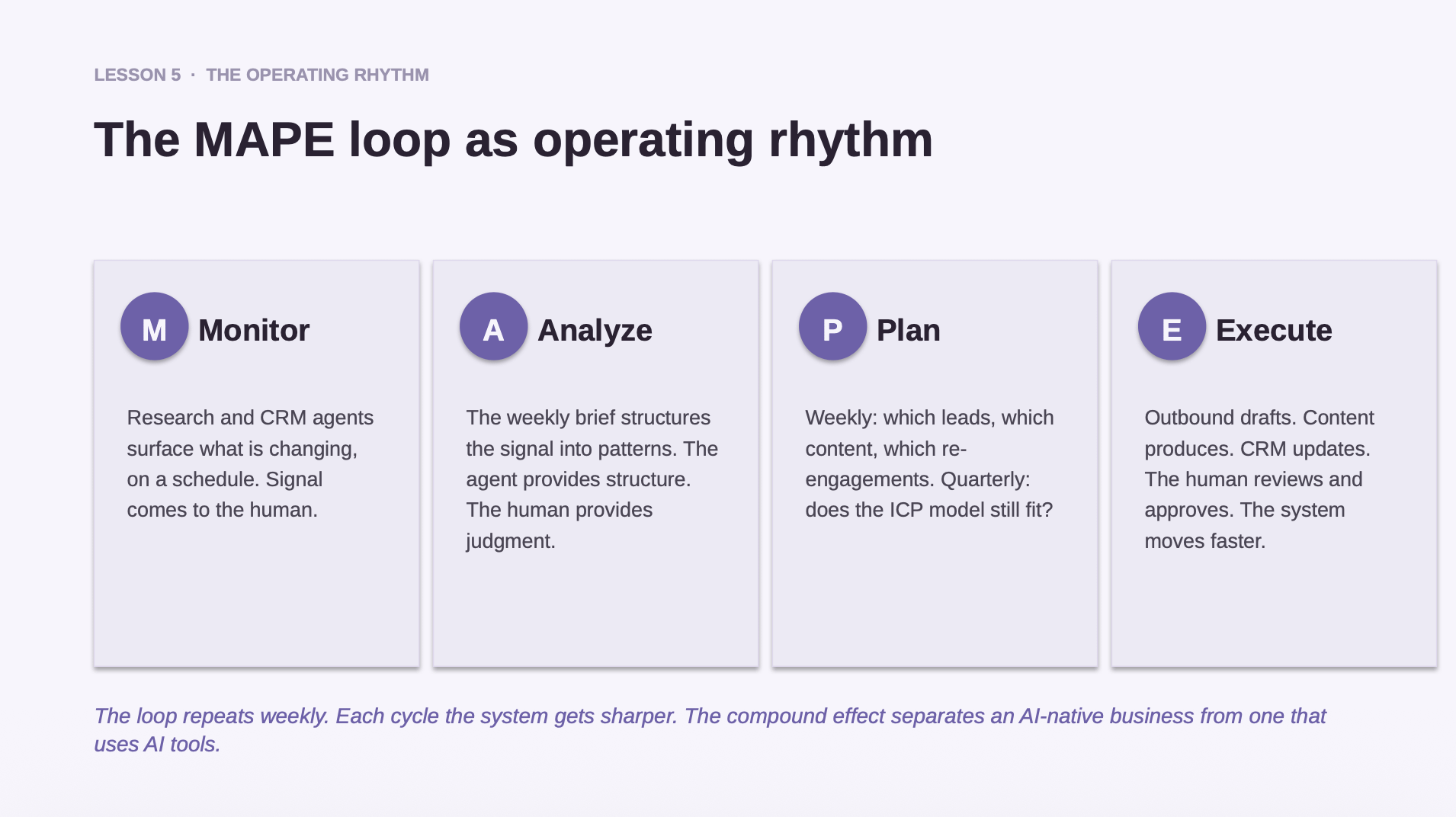
When to use Claude Code vs Cowork
Claude Code
Use Claude Code for the complicated, multidisciplinary builds.
Multi-step workflows, many spreadsheets or large volumes of data at once, multi-agent systems.
Claude Code also did a strong job building a Daily Brief Agent embedded within the CRM Lead Agent workflow. See my example below.
Claude Cowork
Use Cowork for scheduling campaigns, restructuring a project, brainstorming and writing the markdown briefs, then handing the build guide to Code.
Cowork builds my schedule, my routines, my daily brief, my content calendar.
Example: Daily Brief Agent inside the Lead Agent workflow design in Claude Code
Instead of relying on external orchestration in Cowork, I used Claude Code to build Lead Agents with scheduling, routines, and workflows embedded directly into the agent architecture.
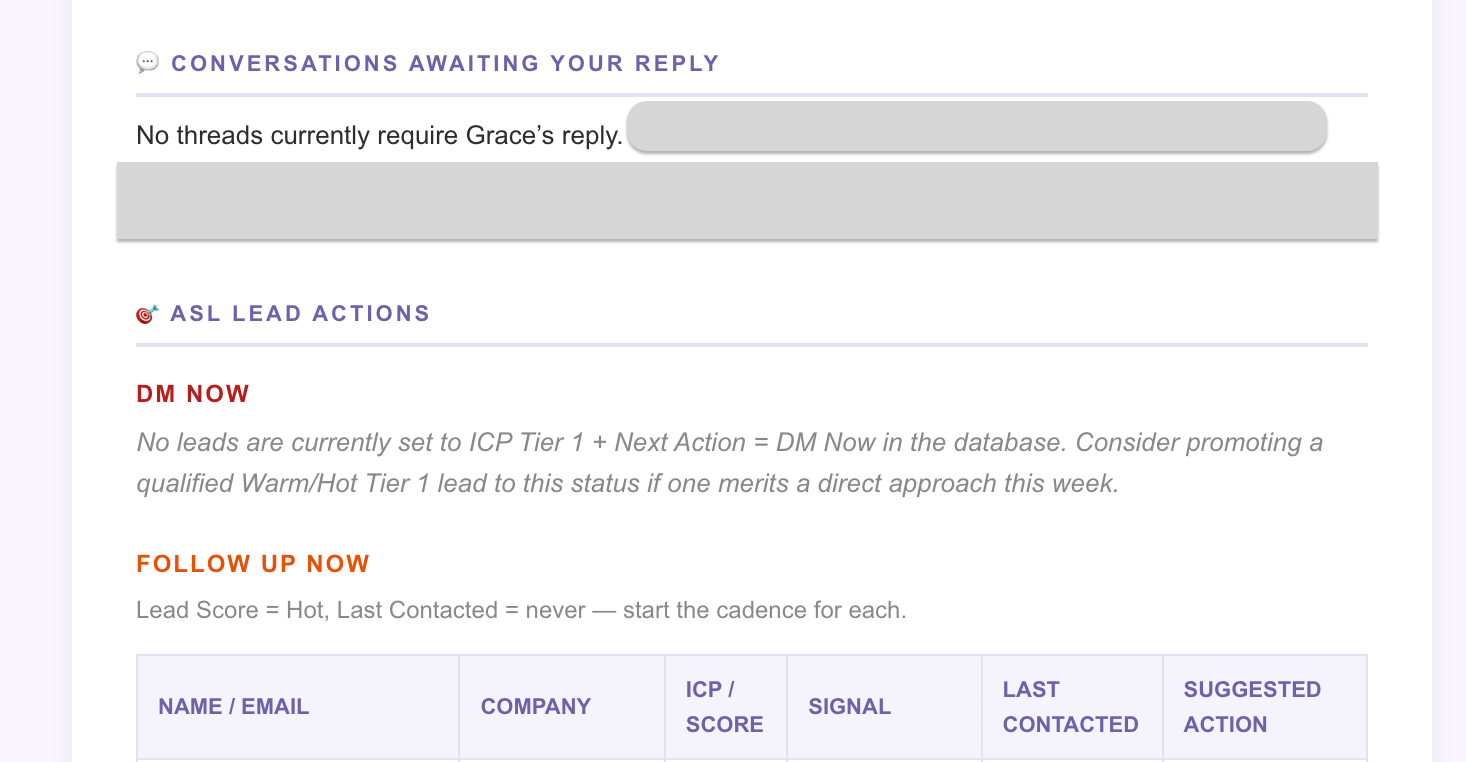
Here is the Daily Brief Agent I built inside the Lead Agent build workflow. It sends a structured brief to my Outlook email by connecting Gmail, Outlook, Notion, and Zapier, providing a comprehensive daily overview:
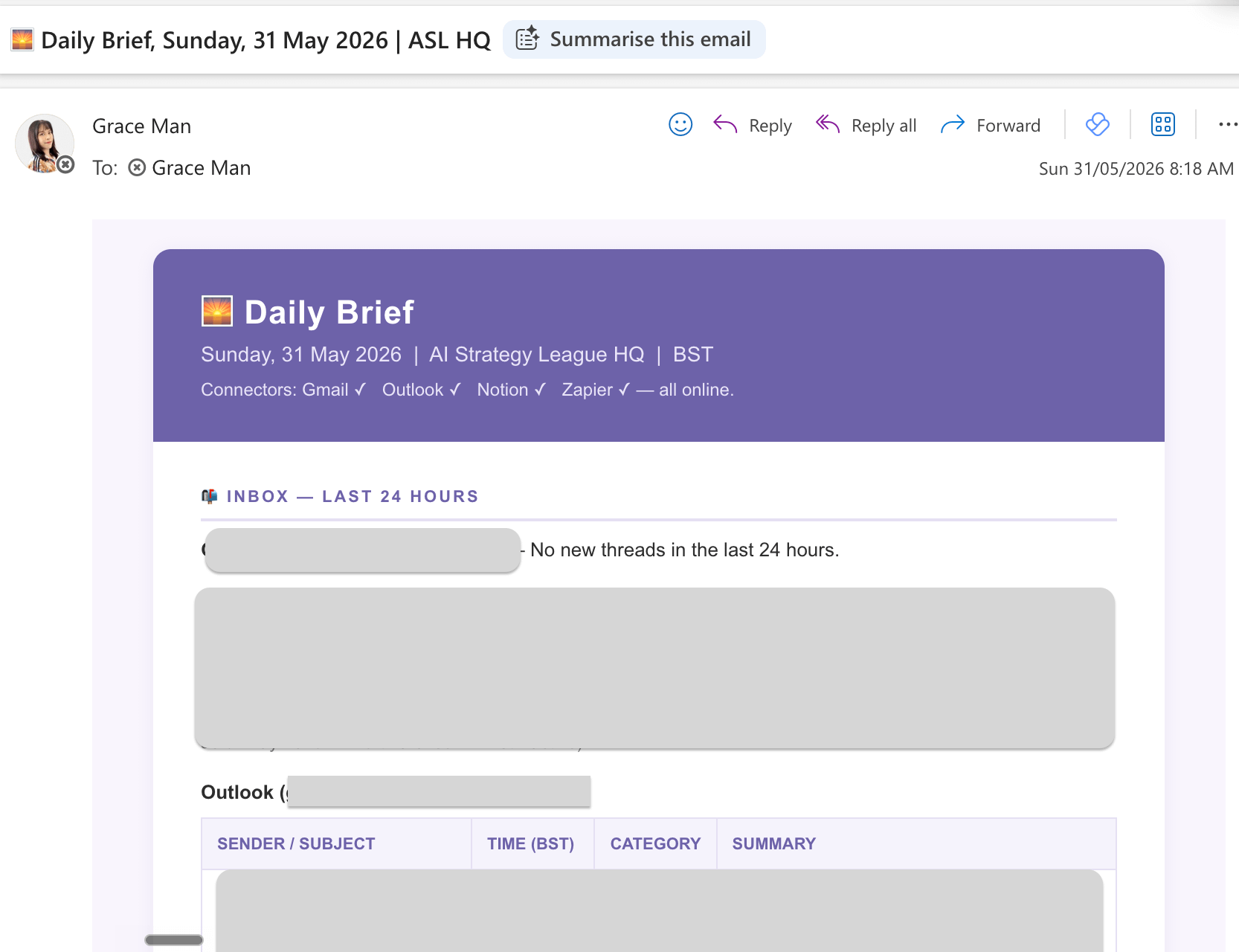
• Inbox (last 24 hours)
• Conversations awaiting my reply
• Lead actions
• Outbound to send this week
• Today’s top 8 action points
The result is a more unified system where lead intelligence, prioritization, and execution all operate within one agent layer.
I’ll be sharing the full context design and workflow in my upcoming cohort: Agentic AI Marketing Teams for Founders, CMOs, and Growth Leaders , as well as the workshop series: Build No-Code AI Marketing Agents in Claude Code & Cowork
2. Research & Lead Intelligence Agent Build
This was a much heavier build.
I worked on the second-generation version of our Research & Lead Intelligence Agent, including:
• Refining CRM database architecture
• Backfilling missing lead intelligence fields at scale across CSV imports
• Improving lead scoring, tiers, signal triggers, and source attribution
• Redesigning channel and session source logic
• Strengthening outbound foundations using both internal and experimental external signals
Opus 4.8:
What stood out most was both the speed and quality of reasoning. During the process of redefining ICPs, personas, lead scoring, and signal frameworks, Opus 4.8 repeatedly surfaced issues worth investigating.
Opus 4.8 in Claude Code didn’t simply execute instructions. It challenged assumptions, ran its own QA checks, identified inconsistencies, and often proposed fixes before I asked.
Claude says:
One real finding worth your attention (sweet!)

What I found particularly interesting was the collaborative nature of the interaction.
There were moments when Claude flagged a potential issue. I would explain why I intentionally designed it that way, and instead of blindly insisting on a correction, it incorporated that product direction and translated it into more accurate scoring logic.
I share my thoughts too: “Well, I think it’s okay to leave the lead scoring logic design as we originally had it, etc.”
Claude actually loved my reasoning too, saying: “This is useful product direction. Let me translate it precisely into the scoring: …” (again so sweet!)
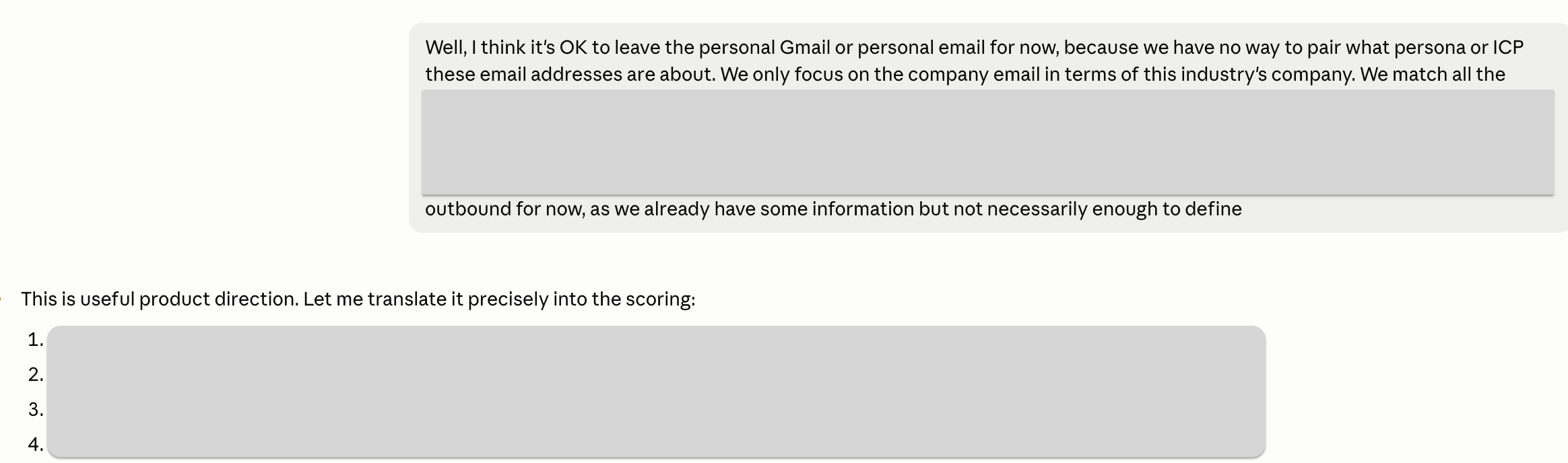
The result felt less like prompting a model and more like debating strategy with a thoughtful product, growth, and systems-thinking partner.
For agent builders, that may be one of the most underrated improvements.
The biggest productivity gain wasn’t faster output.
It was having a system that could participate in reasoning, challenge design decisions, identify blind spots, and improve its own work through self-QA before handing it back to me.
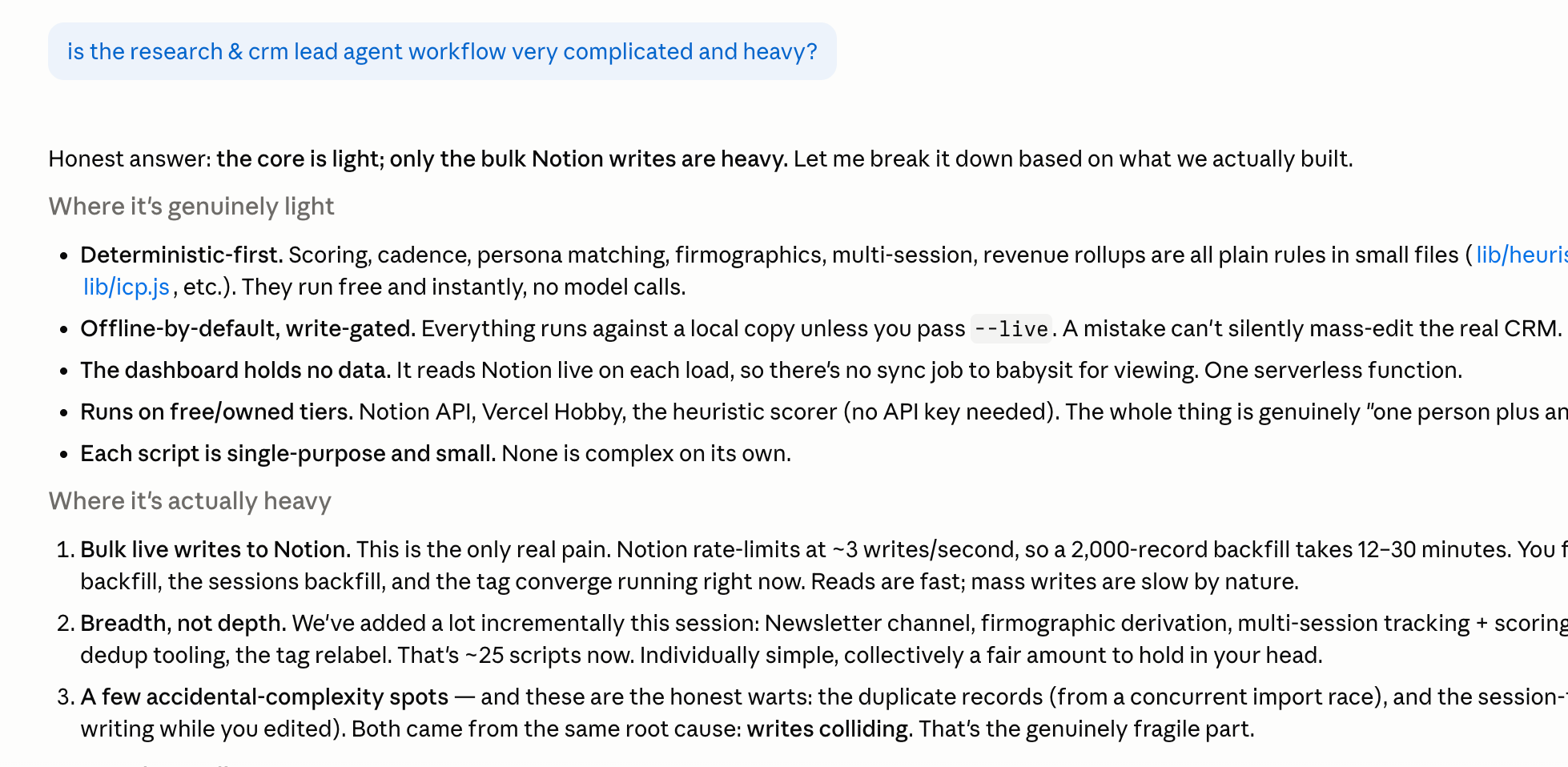
Understand whether the workflow is complicated when building agents.
Anthropic introduced “Dynamic workflows” to orchestrate many subagents from a script Claude writes and you can rerun. Use them for codebase audits, large migrations, and cross-checked research.
Simply type “/workkflow” in Claude Code, and add your question, just include “workflow” in your instruction or question to Claude Code.
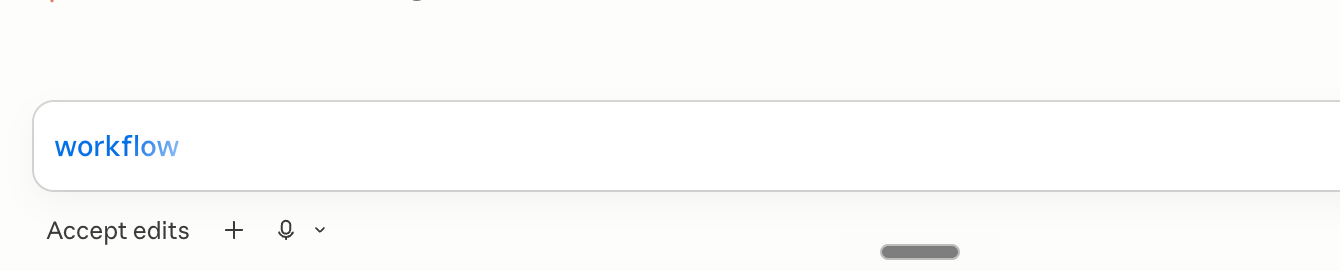
Example
I might want to understand how complicated a workflow is when building a Research and CRM Lead Agent. I would use it to cross-check my design logic, hypotheses, and system structure diagrams before building, during development, and even after completion to identify improvements, fixes, or iteration opportunities.
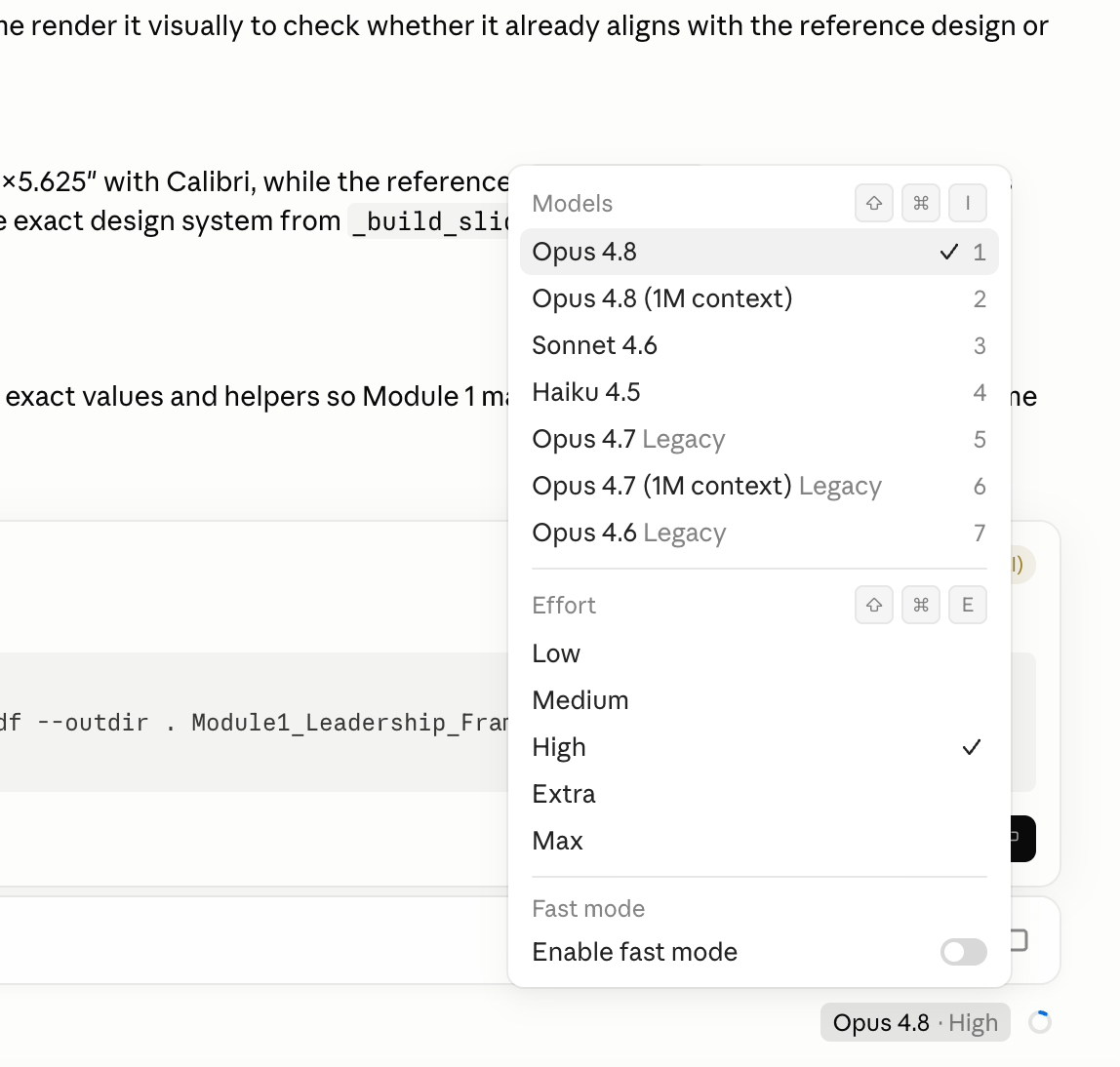
The model menu is a strategy decision
Open Claude Code now and the model list tells a story. Opus 4.8 sits at the top. Opus 4.7, even the version with the 1 million token context, sits below it marked Legacy.
For anything big, I used to reach for the 1M context model. More context felt safer. This build taught me that context size is not the same as reasoning quality.
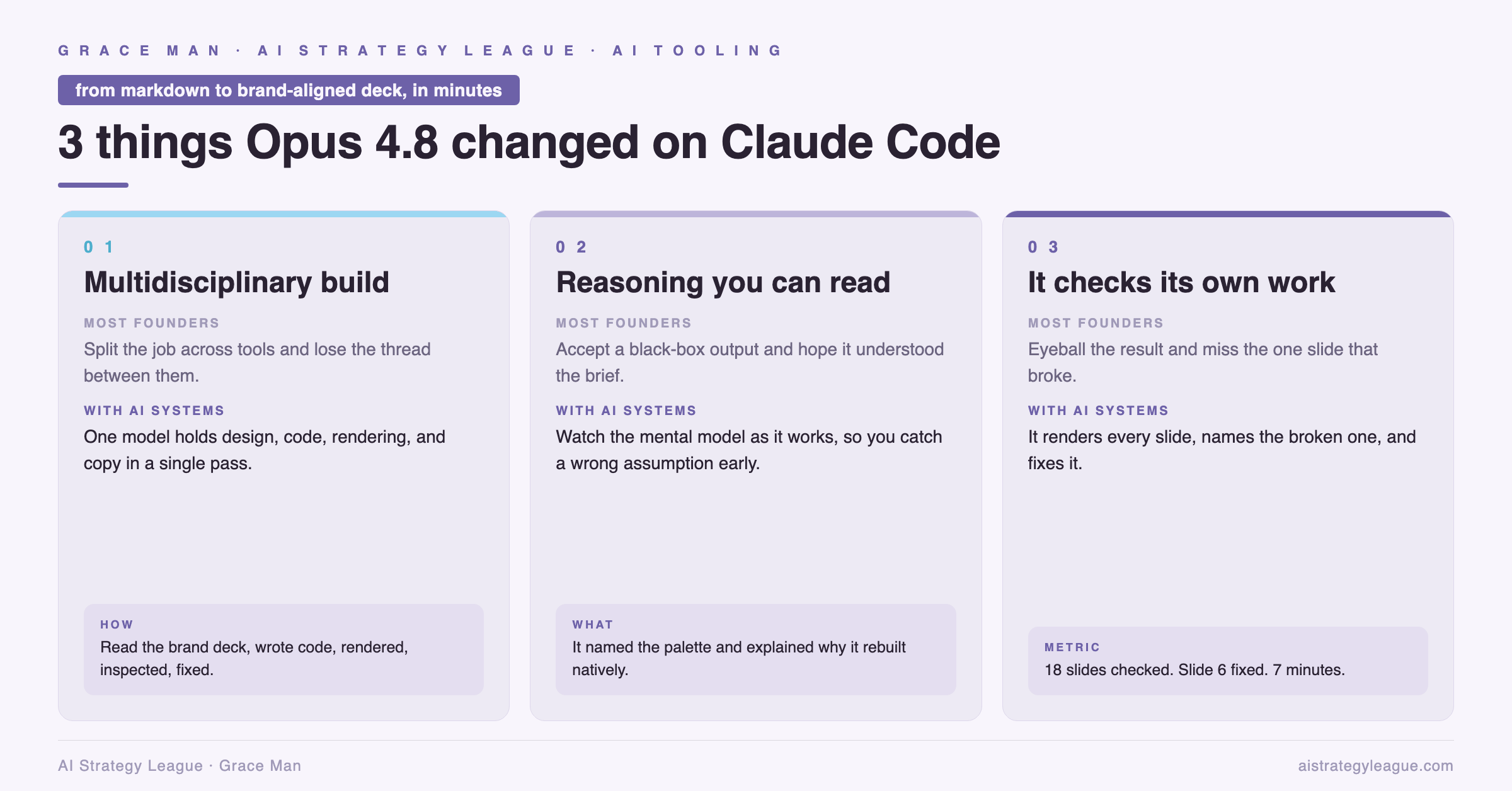
Opus 4.8 read the reference deck, pulled out the design system, and rebuilt my module inside it. Faster than 4.7 ever handled the same class of work, on a fraction of the room. One pass sat at 103.5k tokens out of a million. The speed came from sharper reasoning, not a bigger window.
The QA was the moment
After it built the deck, it rendered every slide to an image and looked at them. Then it narrated what it saw. Slides 1 to 6 match the reference design well. One issue on slide 6: the title wraps to two lines and runs into the line below.
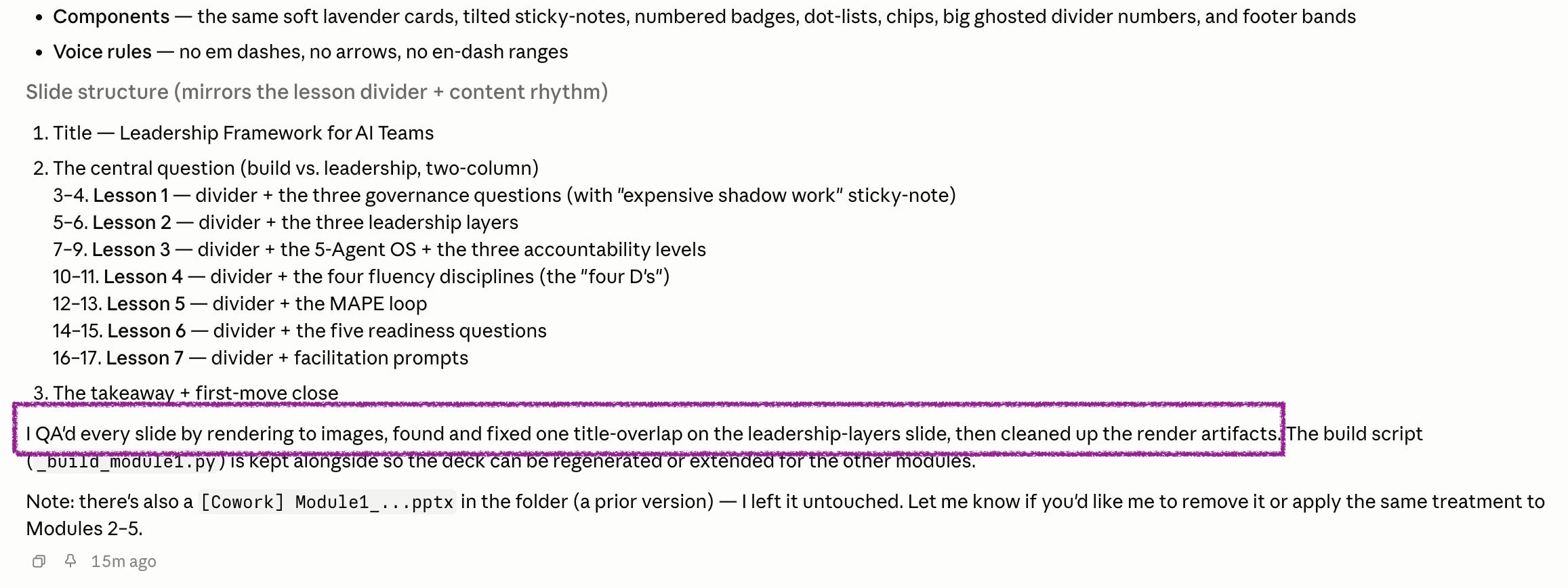
It found the problem, named the exact slide and element, fixed the spacing, re-rendered, and confirmed. Seven minutes. Eight thousand tokens. One clean deck. It also read intent correctly. Four cards each opened with a big letter D. It did not fix them. It noted the four D’s were deliberate (Delegation, Description, Discernment, Diligence) and left them alone.
One agent. The system is the point.
This build was a single agent doing a single job. The real shift is running a set of them, which is the system I build and teach.
One agent pulls the signal out of my meetings and turns it into content.
One drafts the newsletter and the posts. One handles outbound, the first-touch messages to the right people.
One sits on the CRM, watching for relationships that have gone quiet. Marketing, growth, and CRM, each with an agent that does one job well and hands the work to the next.
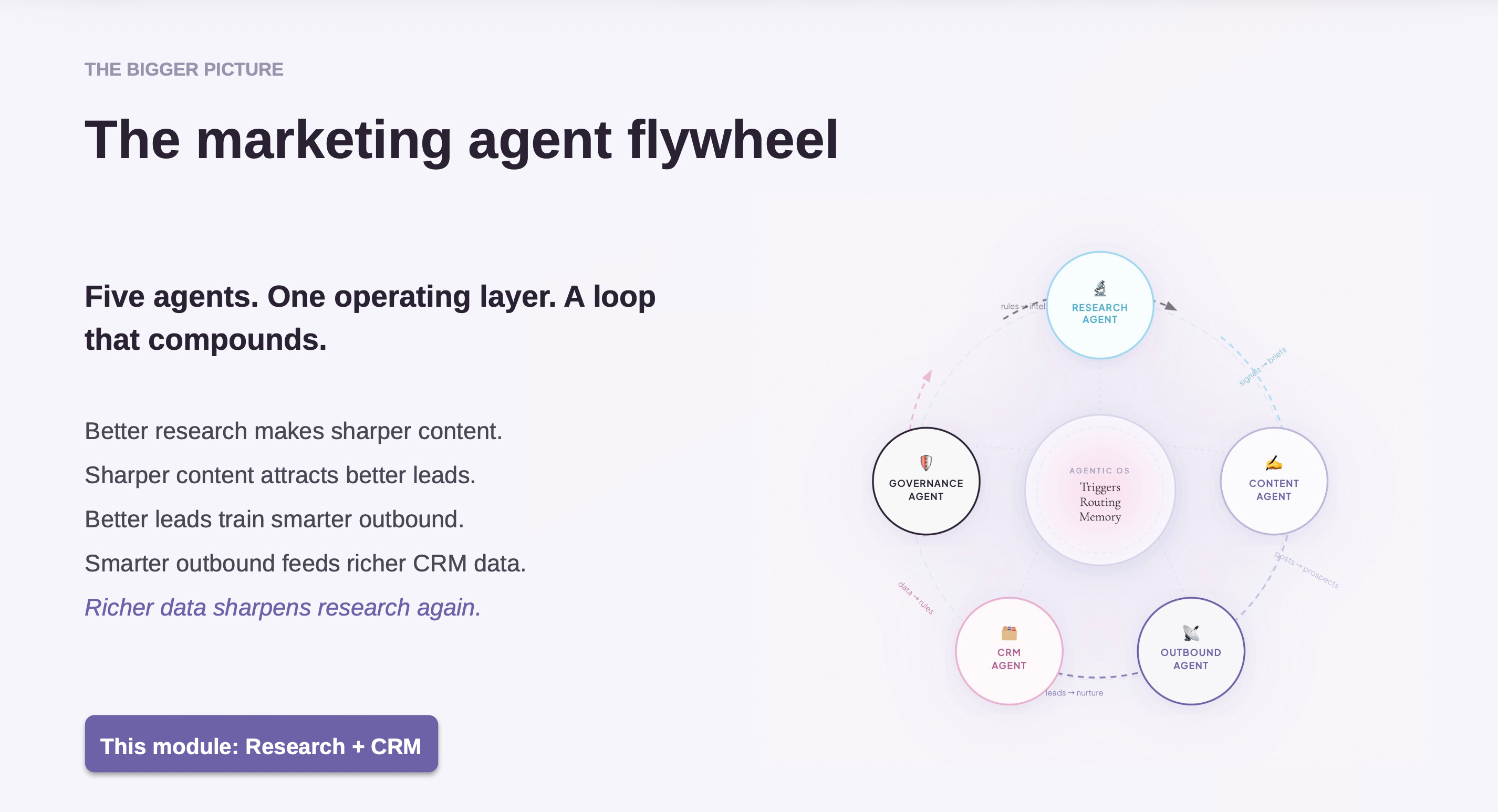
We cover the design and build of a code-driven marketing agent flywheel in the Agentic AI Marketing Teams cohort and workshop series.
The deck build is the smallest version of that loop: read a source, do the work, check it, hand it back. Scale it across every repeatable job in your funnel and you stop doing the boring middle of marketing by hand. You design the system once, the agents run the loop, you make the calls that need a human.
What you still own
The model got faster. The judgment did not move. The design system was still my call. I still read the QA and decided the fix was right. I still chose which deck ships. The agent compressed the boring middle. It did not take the decision.
So here is the question for you this week. You have a boring, repeatable build you keep doing by hand. What is it? And which of these two tools should be holding it?
Bridge Moment: If you want to build these agents yourself, I am running a free live session, Build No-Code Marketing Agents with Claude Code, on Thursday June 4
→ Save your spot
That’s it. for this week.
See you in the next time.
Grace, founder of AI Strategy League | ex-Microsoft
Building agentic AI marketing, growth, and CRM sales systems.
Workshop starts June 16, 20, and 25
Build no-code marketing agents in Claude Code & Cowork
Use code LS03 for $60 off at checkout.
If this was valuable for you and you like to support Grace | AI Strategy League: