Weekly practical insights on agentic AI for product growth, marketing, and CRM that drive compounding growth.
One Growth Operating System for Content, Lead, and Outbound
Here is the problem kept hitting.
Growth content lived in one place. Growth outbound lived in another. CRM lived in a third. Each one worked. They don’t talked in a loop. Write a newsletter, then go cold into outbound and forget what the newsletter had just taught me about what resonates.
The old way splits the work by tool
A content tool. An outbound tool. A CRM. A reporting tab. Each tool is fine on its own. The cost is the seams between them. Nothing carries over. The voice that writes the newsletter does not know the leads. The outbound does not know what content landed. You re-explain yourself to every tool, every week.
The new way closes the loop
What if we closed the loop so these functions no longer operated in silos?
They become one growth OS:
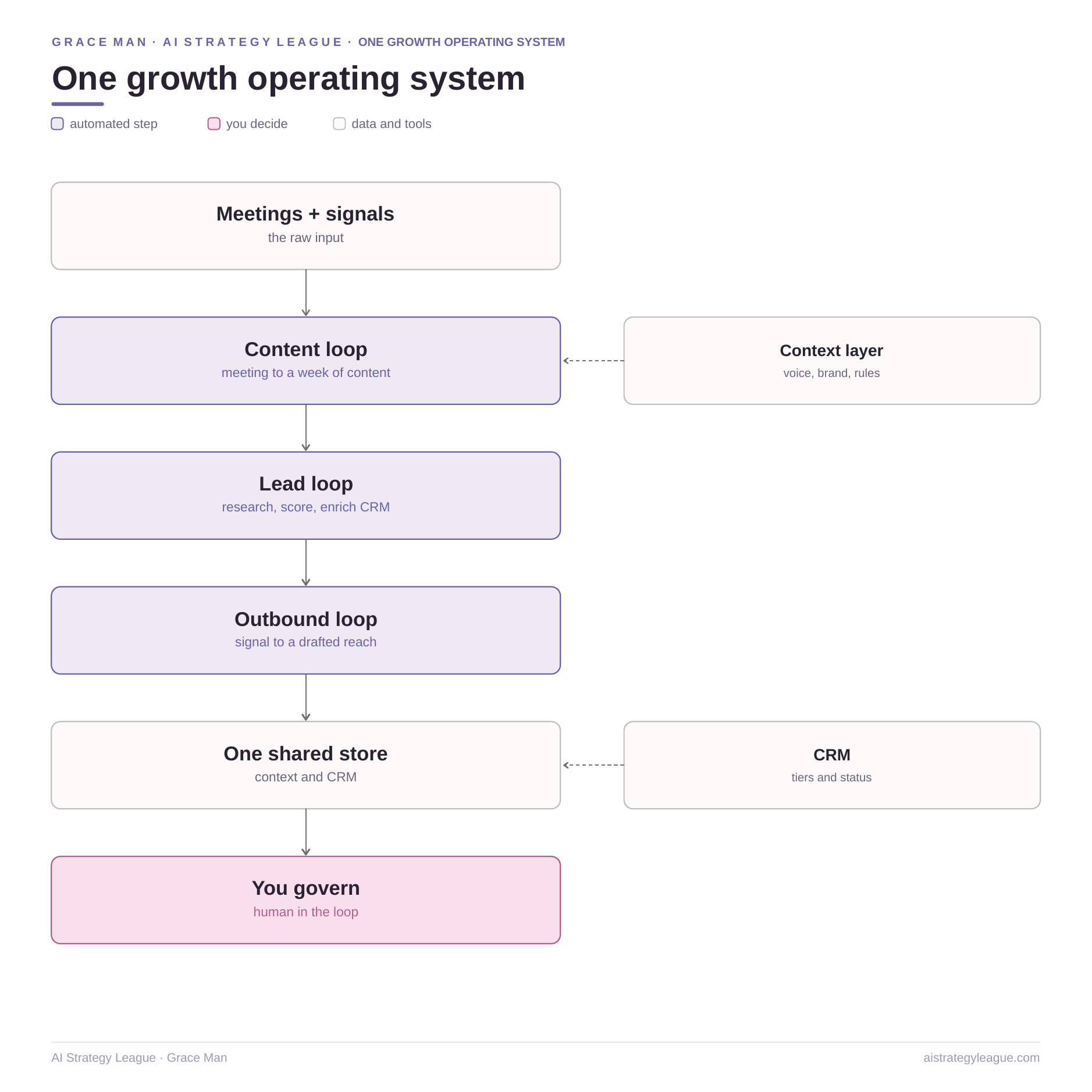
A raw idea becomes accumulated content velocity.
A meeting becomes product learning and content distributed across channels.
The same system that stores content also powers CRM and outbound.
Every reply, conversation, and customer signal sharpens the next piece of content I create.
Research improves content.
Content attracts better leads.
Leads enrich CRM.
CRM insights improve outbound.
Outbound conversations generate new signals.
One operating system. One compounding loop. And I sit at the gate of it.
That is the outcome. Here is how it fits together, working backwards.
One of my recent realizations is that the unit is not the tool. It is the operating system.
Map the workflows into one place, and the seams disappear.
In our most recent cohort, Agentic AI Operating System for Product Growth and Marketing, here are some takeaways from our students:
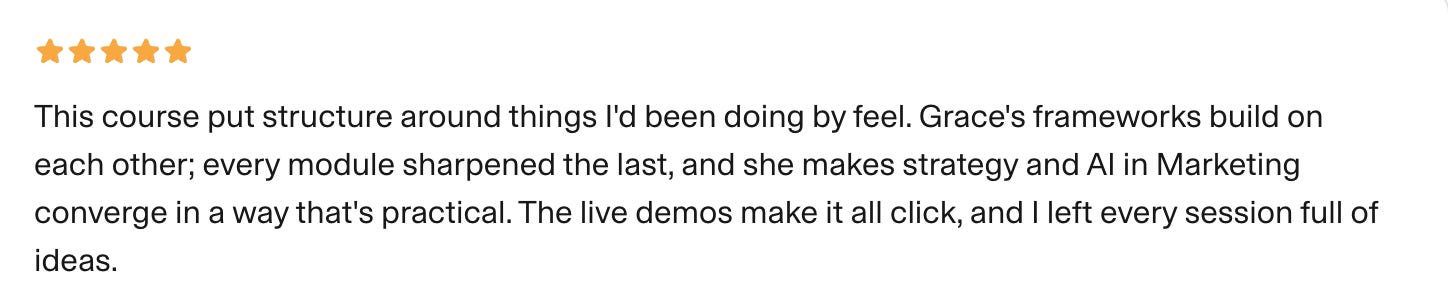
“The biggest takeaway for me was that agentic AI works best when it is designed around a business outcome, not just random tasks. Agents can help with research, follow-up, content, and CRM workflows, but the human still owns the voice, ethics, relationships, and final judgment.”
Some of the students shared their reflections after architecting their workflows and building their agents:

One shared store.
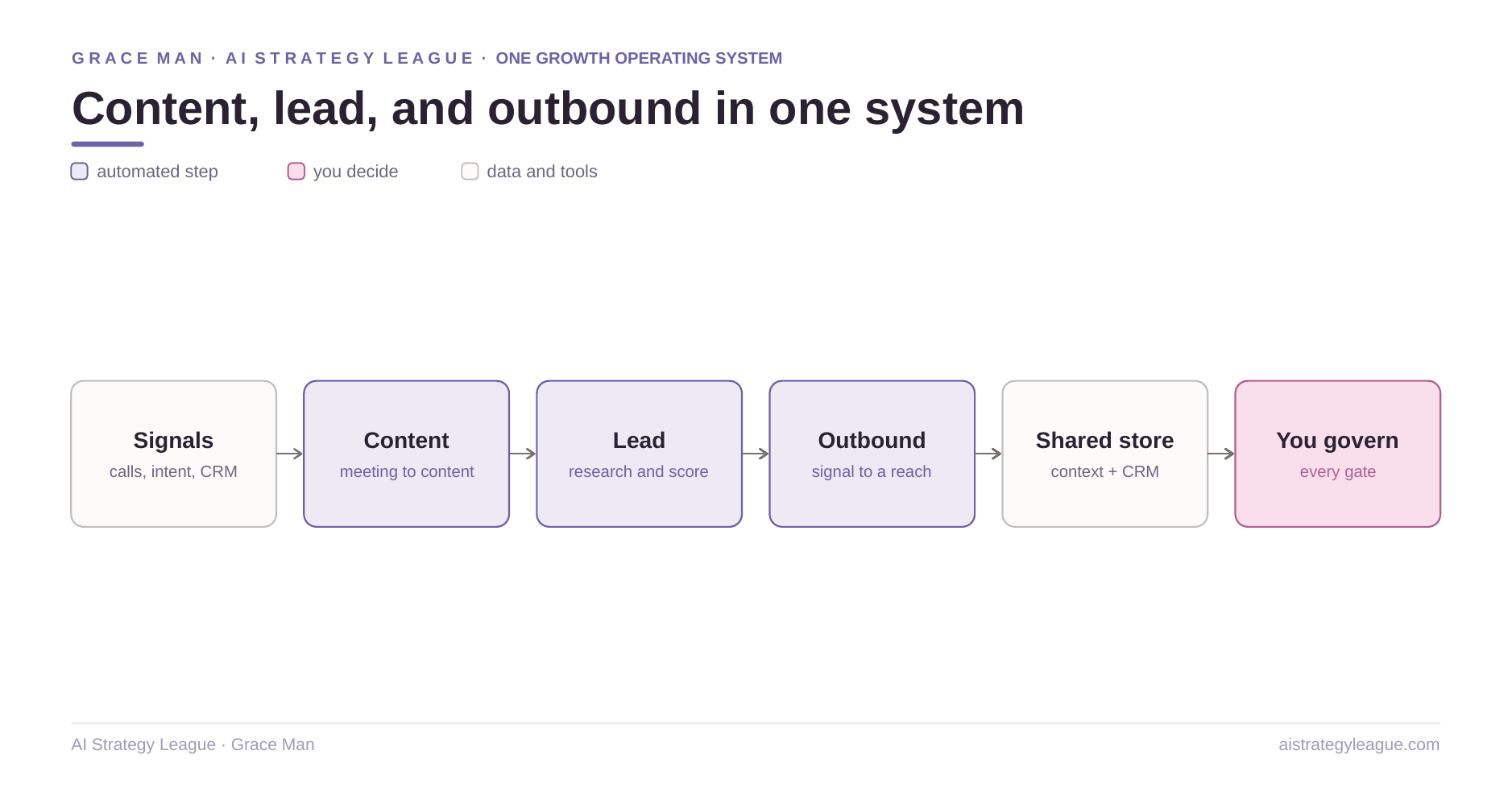
The center of it is a single store. Find the right tool where you’re able to hold the context and memory layer for your content, lead, and outbound.
It holds the context layer, who I am, my voice, my brand, my rules. It holds the content, the CRM, and the outbound state.
Every agent reads from it and writes back to it. That is the whole trick. Not more tools. One memory that everything shares.
Three agents, one system.
The content loop turns a meeting into a week of content.
The lead loop researches a prospect, scores them, and enriches the CRM.
The outbound loop turns a signal into a drafted message.
On their own, they are three useful agents. In one store, they become something better.
Here is the part that compounds:
Outbound throws off data that content needs.
Which message got a reply. Which angle a prospect actually cared about.
That goes into the CRM, and the CRM tells the next newsletter what to say.
Content, in turn, gives outbound a reason to reach out, and a warm thing to point to. Each loop feeds the next.
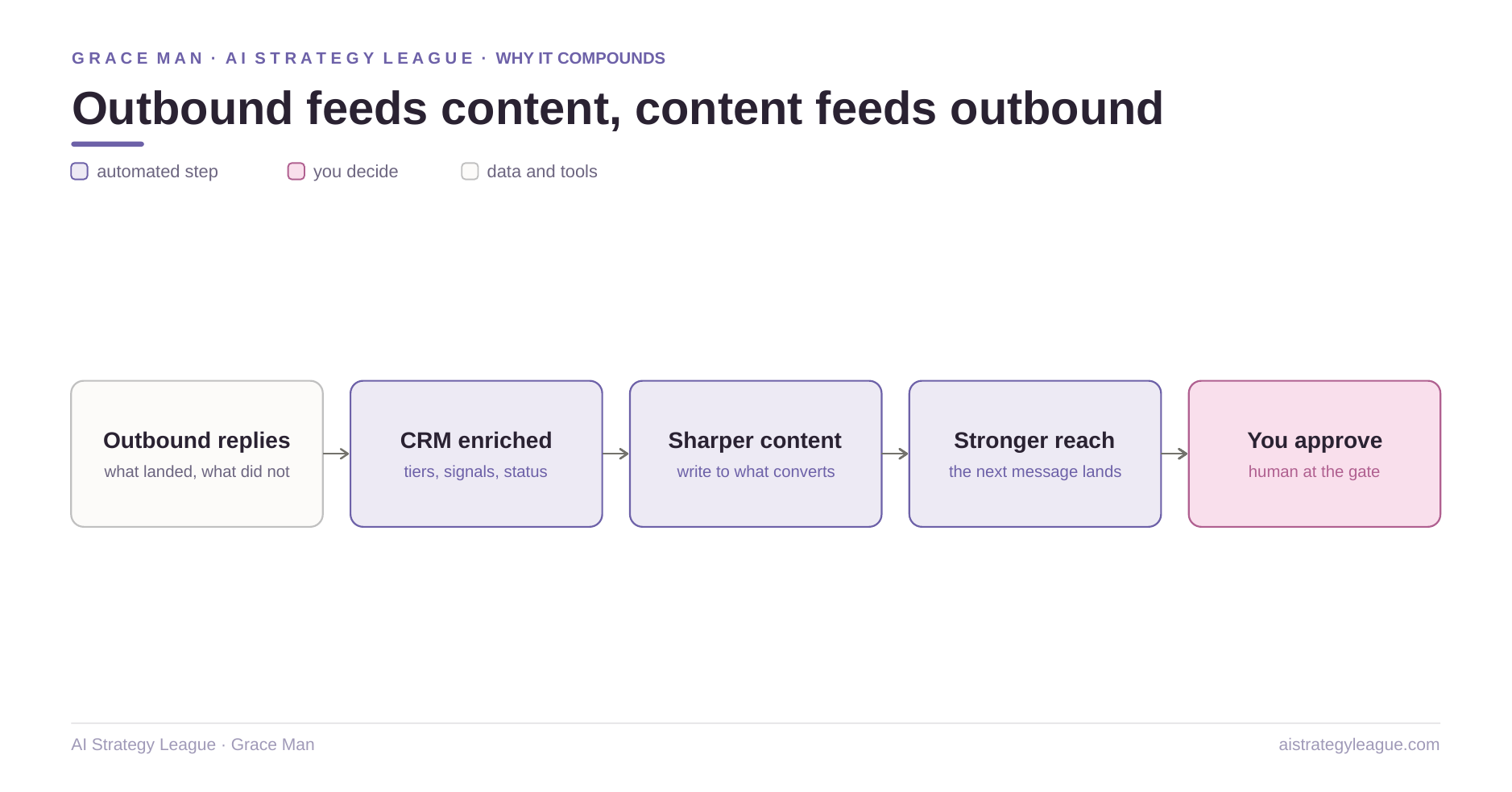
This is why a system beats a stack. A stack of tools adds. A system compounds. The longer it runs, the sharper it gets, because every loop leaves the store a little smarter than it found it.
A small example. Last week an outbound reply told me a prospect cared about governance, not speed. That one line changed the next newsletter’s angle before I had to guess. The store remembered it for me.
Here is the part that compounds:
Outbound throws off data that content needs.
Which message got a reply.
Which angle a prospect actually cared about.
That goes into the CRM, and the CRM tells the next newsletter what to say.
Content, in turn, gives outbound a reason to reach out, and a warm thing to point to.
Each loop feeds the next.
This is why a system beats a stack. A stack of tools adds. A system compounds. The longer it runs, the sharper it gets, because every loop leaves the store a little smarter than it found it.
A small example. Last week an outbound reply told me a prospect cared about governance, not speed. That one line changed the next newsletter’s angle before I had to guess. The store remembered it for me.
The human is the gate.
None of this runs open loop. I approve at every gate. The agent drafts the newsletter, I decide. The agent scores the lead and drafts the reach, I decide.
The system is fast precisely because the judgment stays with me and only the work is delegated. Speed from the machine, judgment from the human. That line does not move.
The build order, if you want to copy it.
Do not start by buying a tool. Start by drawing the operating system on one page:
Write down the one store everything will share.
Stand up the content loop first, because it gives you something to publish this week.
Add the outbound loop next, pointed at the same store, so the two read the same context and the same CRM.
Wire the feedback last: let outbound replies update the CRM, and let the CRM weight what you write next.
Keep yourself at every gate the whole way.
You do not need to be technical for this. You need to be clear about the workflow before you automate it. Architecture first. Tools second.
If you are ready to design your agentic workflow and launch agents. We starts June 16, and a couple timeslots available in June:
Launch No-Code Growth and Marketing Agents in Claude
We’re also launching a new series of Close the Loop sessions, where we collaborate with senior leaders across product, growth, and marketing to connect strategy, execution, and AI adoption.
Series 1: Close the Loop: From Product Signals to Automated Growth
More lightning sessions
Grace Man,
Founder, AI Strategy League | Ex-Microsoft
If this was valuable for you and you like to support Grace | AI Strategy League: