We looked at a B2B developer-intelligence company recently. Strong product, real market credibility, a twenty-year research reputation. And a funnel that told a clear story: 10,000 monthly visitors, 100 MQLs, 10 SQLs. A 1% site-to-MQL rate, and a 10% MQL-to-SQL rate. Ninety-nine of every hundred qualified visitors were leaving without ever becoming known.
The instinct in that situation is to buy more traffic. Triple the top of the funnel, triple the MQLs. It is the wrong move, and it is expensive. The problem was not volume. It was structural, and it sat between MQL and SQL.
The default reaction is to blame the channel. It is almost always upstream.
When Sales says the leads from marketing are low quality, the reflex is to change the channel or the campaign. The correct diagnostic is to ask one question first: is the problem upstream, in who enters the funnel, or downstream, in how Sales disqualifies?
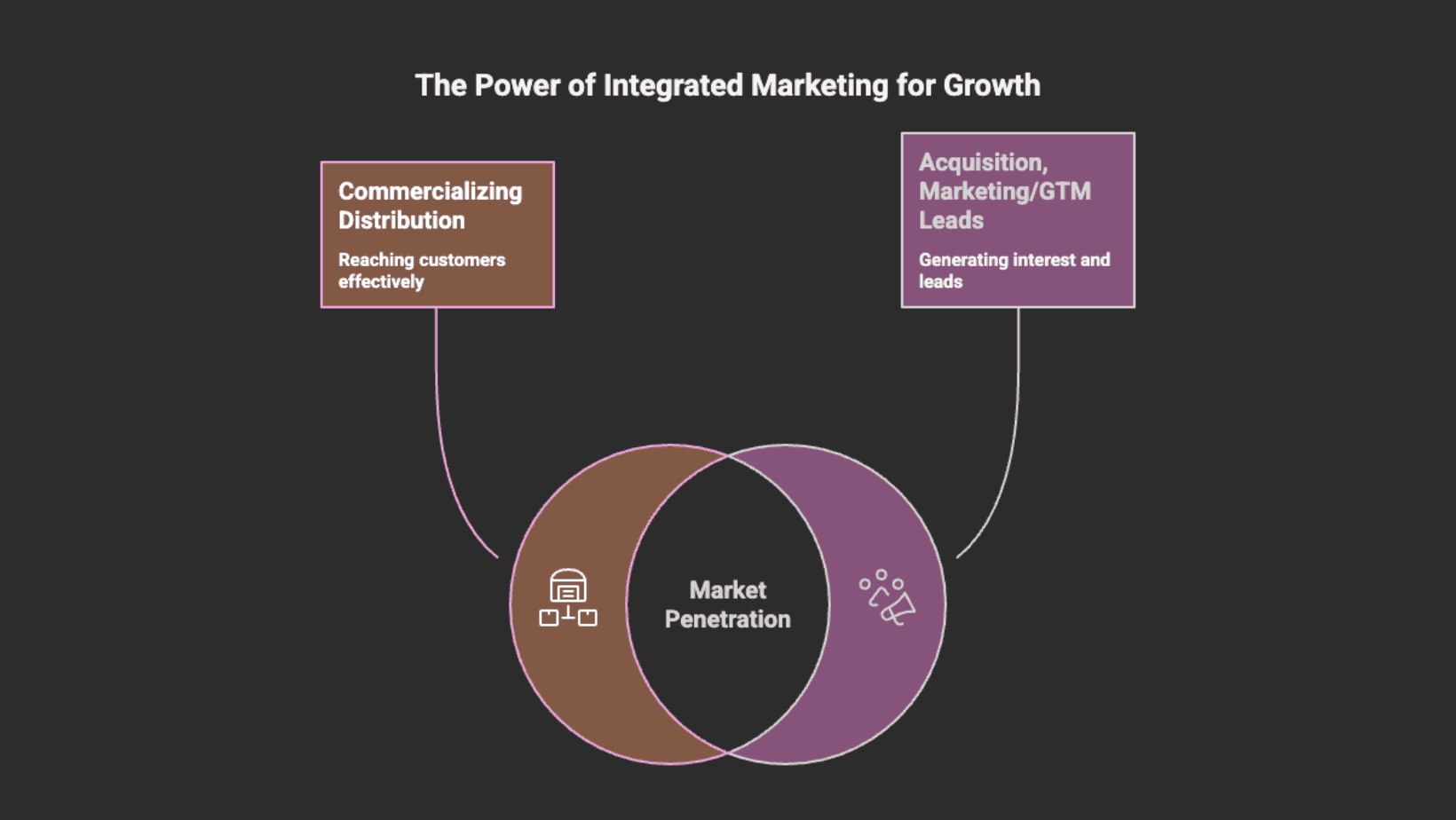
Here it was upstream. The funnel was treating “downloaded a report” as the qualifying signal. Most people who download a report are readers, not buyers. Marketing was doing its job, capturing a wide audience. Sales was doing its job, converting the narrow buyer subset. Nobody had built the bridge between the two, and the gap showed up as a low MQL-to-SQL rate. That is not a channel problem. It is a definition problem.
The five symptoms of an MQL-to-SQL leak
Wherever we see a 10% MQL-to-SQL rate, we expect to find the same five things:
- No agreed MQL definition. What makes someone sales-ready versus simply curious is not written down, so Marketing passes volume and Sales receives noise.
- No lead scoring that separates decision-makers from browsers. Firmographic fit (industry, company size, role) and behavioral intent (pricing-page visits, return sessions, services-page views) are never combined into a single signal.
- No SLA on follow-up speed. A high-intent lead not contacted within about two hours qualifies at a much lower rate. Hot leads go cold in the gap between the form closing and the rep picking up the phone.
- No nurture in the middle. The funnel offers immediate sales outreach, which is too aggressive too early, or nothing, and the lead goes cold. The middle layer is missing.
- Sales is right that the leads are low quality, but the cause is structural, not executional. Marketing and Sales have to be solving for the same definition before any tactic will hold.
What we would change, in order
First, the MQL definition. Add a work-email-domain requirement, a minimum company size, and a seniority floor. Volume drops 20 to 30%. MQL-to-SQL conversion rises to 15 to 20%. Net SQLs come out comparable or higher, and Sales stops burning time on people who were never going to buy.
Second, the scoring and targeting. Combine firmographic fit and behavioral intent into one lead score. Route the top band to a rep inside two hours. Put the middle band into a short nurture. Leave the rest on the list, watched, not chased.
What we would not change. Not the reports; they are the asset. Not the channel, if it is the right one for this buyer. The fix is at the definition layer, not the traffic layer.
And the pages that were supposed to convert
The same discipline applies to the site. The pages were not converting for structural reasons, not traffic ones: multiple competing CTAs splitting attention, a headline that described a feeling instead of a concrete outcome, and no commitment ladder for a buyer still in research mode. The fixes are boring and they work. One primary CTA per page. A headline aimed at the outcome the buyer is trying to reach. A ladder of low-friction steps, from a free resource to a booked call, so a visitor can commit at their own readiness level.
This is a loop, not a one-off fix
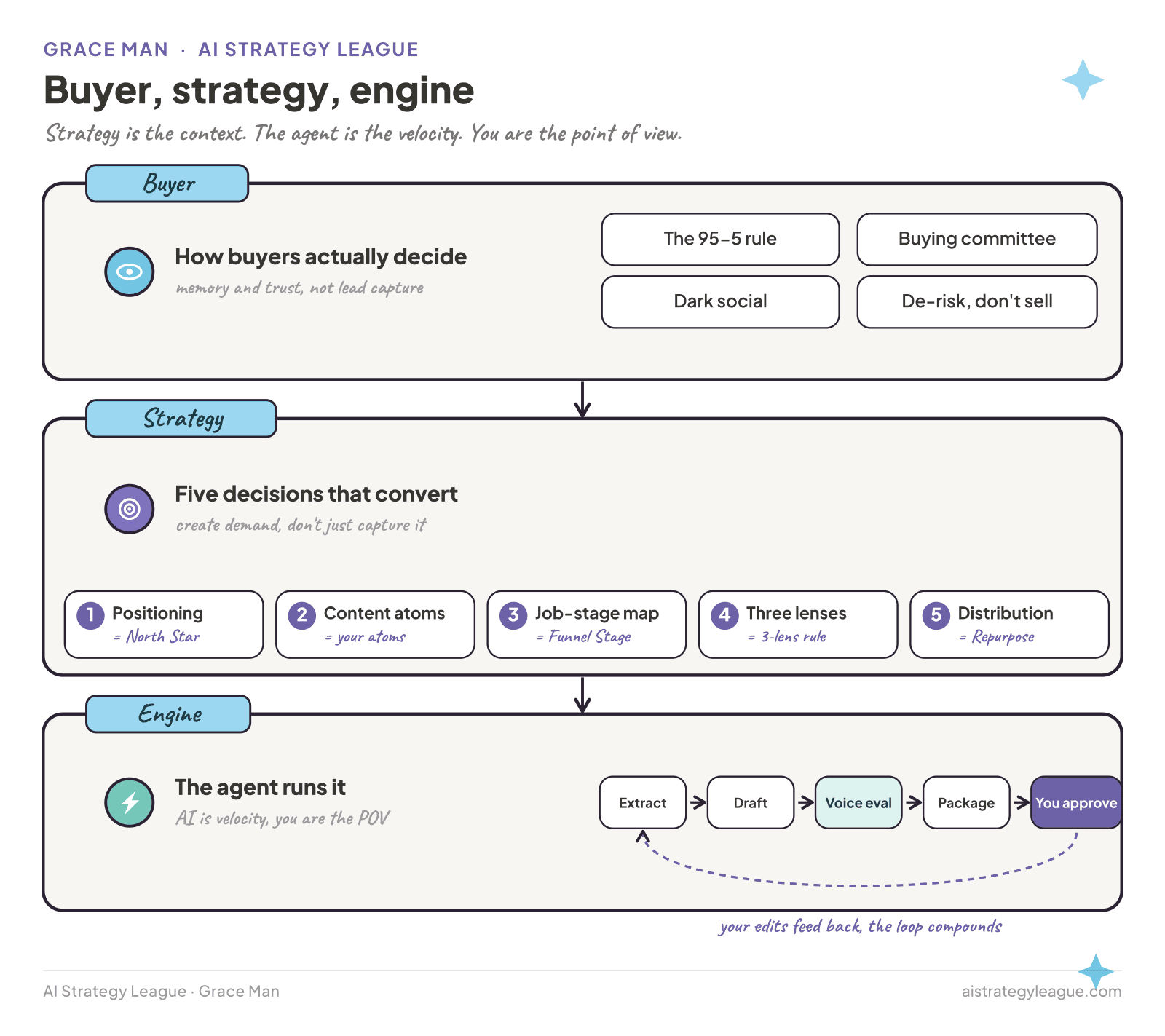
Watch the signals. Fire the right move for the buyer who is ready. Find where the funnel leaks, stage by stage. Fix the definition and the page. Then feed what converted back in, so the next cycle is sharper. Do that, and conversion compounds instead of resetting cold every month.
The traffic was never the problem. It rarely is.